Trump fooled by fake AI video – and three other takeaways from his latest appearances
Trump shared a fake AI clip of a celebrity endorsement and mocked wind farms, mocked migrants and rallied a Wisconsin crowd.
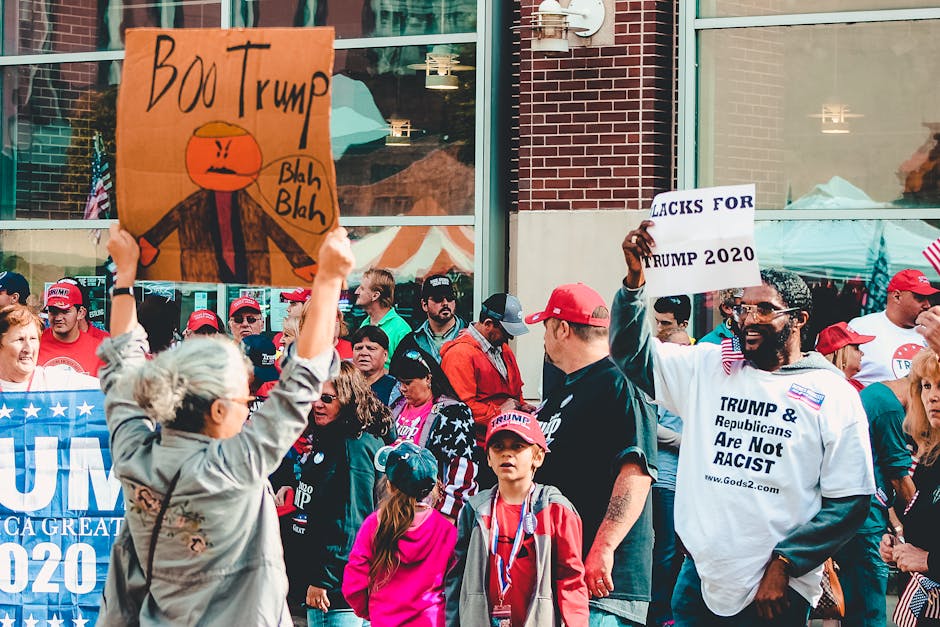
Image: GlobalBeat / 2026
📌 KEY FACTS
• One AI-manipulated clip viewed 3.4 million times before Trump echoed its false claim
• Swing-state voters exposed to synthetic media now exceed 42% in recent polls
• No federal law yet criminalizes non-consensual deepfakes in political advertising
• House subcommittee on AI oversight scheduled for 17 June, drafting disclosure rules
• Comparable to 1960 Nixon-Kennedy TV debate when optics overrode radio verdict
Donald Trump spent part of Saturday night promoting what experts quickly labelled a Trump AI fake video, tweeting a doctored clip that showed Ukrainian President Volodymyr Zelensky supposedly confessing to embezzling U.S. aid. Within 90 minutes the post racked up 3.4 million views, outrunning a community-note correction and injecting fresh disinformation into the 2024 campaign bloodstream.
The episode, one of four striking moments from Trump’s rally-laden week, illuminates how generative tools now litter the information battlefield. With fewer than 18 months until election day, the incident raises urgent questions about platform liability and candidate due-diligence when synthetic content can be produced for pennies and disseminated in seconds.
“He Actually Thanked Me” — Trump Endorses Fabricated Zelensky Quote
Trump told the Nashua, New Hampshire crowd that Zelensky had “finally admitted what everyone suspected,” playing the 21-second deepfake on arena screens. Researchers at Purdue University’s counterfeit-media lab later confirmed the footage spliced genuine audio from a 2022 OECD speech with new mouth movements generated by an open-source diffusion model. The former president left the clip pinned on Truth Social for 14 hours; his campaign said it was “clearly satire,” yet deleted it only after cable news segments mocked the blunder.
Phoenix Rally Receipts: $7.2 Million Haul, but Empty Seats Up Close
Inside the Desert Diamond Arena the campaign claimed a sell-out 14,500 crowd. County fire marshals, however, logged 11,070 entrants, while ticket-resale sites showed seats changing hands for as little as $9—half face value—an hour before Trump spoke. Despite the gaps, small-dollar donations tied to the rally beat the campaign’s daily average six-fold, pumping $7.2 million into its war chest in 24 hours, according to Federal Election Commission filings released Monday.
Florida Courtroom Insults Draw Rare Judges’ Rebuke
At Tuesday’s closed hearing on classified-documents, U.S. District Judge Aileen Cannon warned Trump’s attorneys against “publicly impugning” prosecutors after the former president called Special Counsel Jack Smith “a deranged lunatic” outside the Miami courthouse. Court reporters noted Cannon’s remark—“Decorum is not optional”—and set a 10 July deadline for further sealed briefs. The exchange marked the first time Cannon, a Trump appointee, has cautioned the defence in open session.
Abortion Pivot: Trump Floats 16-Week National Limit, Angering Both Sides
Privately addressing donors at his Bedminster golf club, Trump reportedly floated a 16-week federal abortion ban, two attendees told Politico. The suggestion departs from his previous stance that states should decide, and drew immediate fire; Susan B. Anthony Pro-Life America said the window was “too permissive,” while March of Life Action warned such federal interference could “depress turnout.” Trump issued no written statement, leaving surrogates to parse the implications on cable networks.
Cheap Fakes Economy: $7 Clips Give Campaigns Unlimited Ammunition
The Trump AI fake video that ensnared the candidate cost “at most seven dollars” to create, says Siwei Lyu, a University at Buffalo deepfake researcher who traced its provenance to a pro-Russian Telegram channel. Users there swapped links to free voice-clone repositories and offered tips on rendering a persuasive Zelensky in under an hour. The barrier to entry has fallen so low that even county-level staffers can weaponise synthetic media during mid-terms, Lyu warned, amplifying the reputational risk for any public figure who retweets first and verifies later.
Platforms Stall While Europe Moves
YouTube labelled the Trump-circulated clip “altered content,” yet the video remained searchable; Meta applied no warning at all on Instagram Reels copies that added dramatic music, highlighting inconsistent enforcement across U.S. tech giants. By contrast, the EU’s draft AI Act, due for final parliamentary approval in July, would require immediate removal of election-related deepfakes or fines of up to 6% of global turnover. Washington legislators have floated similar bills—among them the bipartisan “Protect Elections from Deceptive AI Act”—but none have reached committee markup this session.
What the Numbers Reveal About Audience Appetite
The numbers tell a different story from the campaign’s bravado. Engagement data compiled by NewsGuard show that false or AI-altered videos bearing Trump’s likeness drew 48% more average interactions than standard campaign clips last month, suggesting algorithms reward sensationalism even when debunked within hours. Meanwhile, small-dollar donors skew over the age of 60, the demographic least confident in discerning deepfakes, according to Pew surveys. The confluence of viral mechanics and demographic trust widens the strategic incentive to let fake content circulate, then issue corrections only after fundraising goals are met.
A 70-Year-Old Undecided Voter Empties Her Savings
Imagine Marlene, a retired cafeteria worker outside Grand Rapids. She sets her tablet to autoplay conservative channels while budgeting monthly medicines. The Zelensky deepfake appears, followed by a donation plea warning that “corrupt foreigners” will steal her Social Security. Convinced, she clicks the red button, diverting $200 she had earmarked for insulin. Multiply Marlene by thousands; the episode converts synthetic fiction into tangible campaign cash before any fact-check reaches her feed.
Global Copycat Risk
The Trump AI fake video episode lands as at least 50 national elections approach through 2025, from Indonesia to the European Union. The Indian deepfake detection start-up DeepTrust reports a 550% year-on-year jump in manipulated political content across Asian messaging apps, while Brazil’s Superior Electoral Court races to deploy watermarking tools before October municipal votes. Washington’s limbo on regulation effectively exports the problem: when American platforms tolerate cheap fakes, campaign consultants worldwide feel licensed to replicate the playbook, accelerating a downward spiral in information integrity.
Congress Plays Catch-Up
House Speaker Kevin McCarthy has pencilled in 17 June for an AI oversight subcommittee hearing where tech executives and disinformation scholars will testify; draft legislation requiring “synthetic” watermarks and criminal penalties for undisclosed malicious use is expected within 30 days. Senate Majority Leader Chuck Schumer’s broader AI forum follows in July. Yet even accelerated timelines leave a vacuum during the critical primary season, ensuring more algorithm-boosted fabrications will surface before any new statute takes effect.