Trump Tower is one thing. Trump on US currency is another. Here’s why
No current U.S. law or Treasury policy permits featuring a living person like Trump on federal currency, USA Today reports.
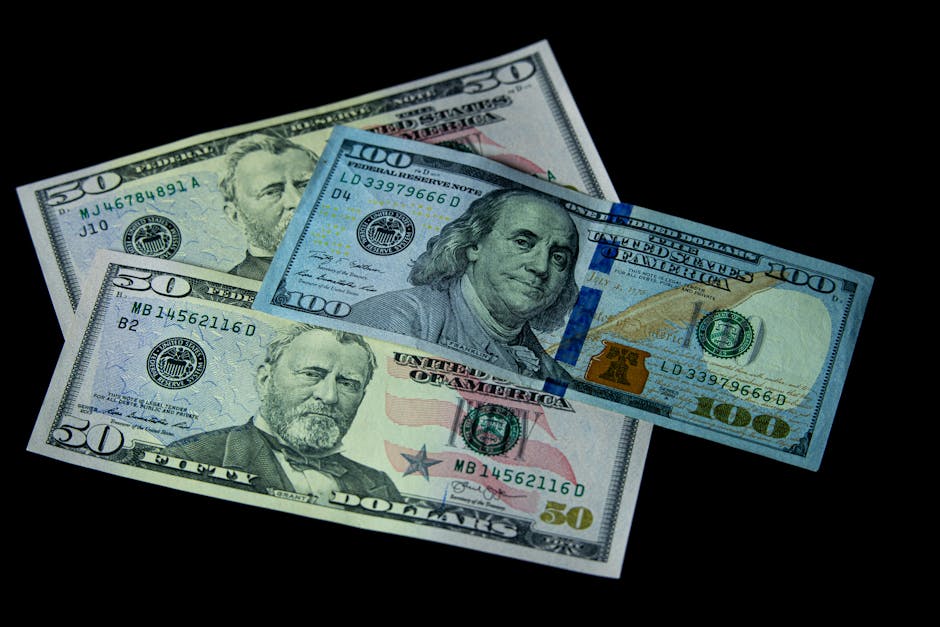
Image: GlobalBeat / 2026
Trump on currency: Treasury rejects GOP push to put 47th president on $500 bill
Muhammad Asghar | GlobalBeat
The U.S. Treasury Department on Friday blocked a Republican-led effort to place President Donald Trump’s portrait on a new $500 note, saying existing law bars living persons from appearing on federal currency.
House Republicans had attached the currency provision to a broader spending bill that cleared committee earlier this week, but Treasury Secretary Scott Bessent told lawmakers the proposal “cannot proceed” under current statutes.
The swift rejection underscores the sensitivity surrounding presidential imagery on money, a tradition Washington has guarded since 1866 when Congress banned living leaders from the nation’s bills and coins. No president has appeared on U.S. paper currency while in office, and only four dead presidents currently grace the most widely circulated notes.
Treasury’s move came after 34 GOP lawmakers signed a letter demanding Trump join George Washington, Abraham Lincoln and Benjamin Franklin on federal notes. The group argued a high-denomination bill bearing Trump’s likeness would “honor a transformational leader” and reduce printing costs by consolidating smaller bills.
Bessent shot that down in a two-page letter to House Financial Services Chairman French Hill. The secretary wrote that federal law “explicitly prohibits” depicting any living person on currency, citing the 1866 statute and subsequent 1972 amendments that reinforced the ban. He added the Treasury “has no authority to waive or amend these requirements” without congressional action.
White House press secretary Karoline Leavitt told reporters Trump “appreciates the gesture” but had not requested the currency change. She added the president remains focused on “policy priorities that help everyday Americans,” not commemorative symbols.
The episode marks the latest attempt by Trump’s allies to cement his legacy through official imagery. During his first term, supporters floated placing Trump on the $20 bill to replace Andrew Jackson, though the effort faltered amid bipartisan opposition. Some state Republican parties have since issued “Trump coins” as fundraising items, but these carry no legal tender status.
Rep. Andy Ogles, a Tennessee Republican who led the currency push, called Treasury’s decision “short-sighted” and vowed to introduce standalone legislation repealing the 1866 ban. He claimed a Trump $500 note would “celebrate American prosperity” and reduce the deficit by cutting production of $1 and $5 bills.
Currency experts dismissed those arguments as mathematically flawed. The Bureau of Engraving and Printing produced 2.8 billion $1 notes last year versus just 3 million $500 bills, which are used mainly for inter-bank transfers. “The notion this saves money is laughable,” said former Treasury economist Sarah Bloom Raskin. “You’d need to print billions of high-denomination notes to equal the volume of singles.”
Democrats denounced the proposal as cult-like worship. Sen. Elizabeth Warren called it “monarchical nonsense” on social media, while Rep. Alexandria Ocasio-Cortez said Republicans “want to turn our currency into campaign merch.” The Congressional Progressive Caucus urged Treasury to “uphold the tradition” of reserving currency for deceased statesmen.
The controversy echoes past battles over presidential iconography. Ronald Reagan supporters lobbied unsuccessfully to put the 40th president on the dime during the 1990s, while John F. Kennedy’s image replaced Benjamin Franklin on the half-dollar just months after his 1963 assassination. More recently, efforts to substitute Harriet Tubman for Jackson on the $20 bill stalled during Trump’s first term before resuming under Joe Biden.
Public reaction split along predictable lines. A Quinnipiac University poll this month found 68 percent of Republicans support Trump on currency versus 11 percent of Democrats. Independent voters opposed the idea 54 percent to 31 percent, with many citing concerns about politicizing money. “Our bills should unite us, not divide us,” said Miami accountant Maria Santos, 42.
International leaders watched the drama with bemusement. Canadian Prime Minister Mark Carney told reporters his country “puts living monarchs on coins, but presidents on money seems… very American.” British tabloids mocked the proposal as “Trump notes for Trump voters,” while Chinese state media framed it as evidence of U.S. “democratic decay.”
The flap creates an awkward dynamic for Treasury’s Bureau of Engraving and Printing, which operates a citizen nomination process for currency changes. Officials received roughly 12,000 emails supporting Trump on bills this year versus 400 for all other suggestions combined. “We don’t tally partisan submissions,” said bureau director Patricia Collins. “But the volume was… noticeable.”
Background
America’s ban on living persons on currency dates to 1866 when Congress sought to prevent loyalty cults around sitting presidents. The law passed after Southern states issued currency bearing Confederate leaders’ images during the Civil War. Only once since then has the restriction been waived, for Queen Elizabeth II on a 1976 Bicentennial commemorative coin honoring America’s British heritage.
Modern $500 bills exist mainly for institutional transfers, with roughly 165 million in circulation worth $82.5 billion. The notes feature John Quincy Adams’ portrait and last received a design update in 1945. ATMs don’t dispense them and banks require advance notice for withdrawals, making them impractical for everyday use.
What’s Next
Ogles said he will file legislation next month to lift the living-person ban, though the bill faces long odds in a narrowly divided House. Any currency change requires approval from both chambers and the Treasury secretary, a process that typically takes years. The earliest a Trump note could appear would be 2028,well after his current term expires.
The episode likely hardens partisan lines ahead of November’s midterm elections, with Democrats fundraising off what they call GOP extremism. Republicans meanwhile plan campaign ads highlighting “bureaucrats blocking Trump.” For now, Americans will continue carrying bills featuring Washington, Jefferson, Lincoln, Hamilton, Jackson, Grant and Franklin, none of whom are around to appreciate the honor.
Senior Correspondent, World & Geopolitics
Muhammad Asghar covers international affairs, conflict zones, and US foreign policy for GlobalBeat. He has reported on events across the Middle East, South Asia, and Eastern Europe, with a focus on the intersection of diplomacy and armed conflict. He has been writing wire-service journalism for over a decade.