Trump’s Government Moves to Spare an Unhappy Taxpayer Named Trump
U.S. Treasury gave Trump’s company a $12.5 million tax break it had initially said was improper, records show.
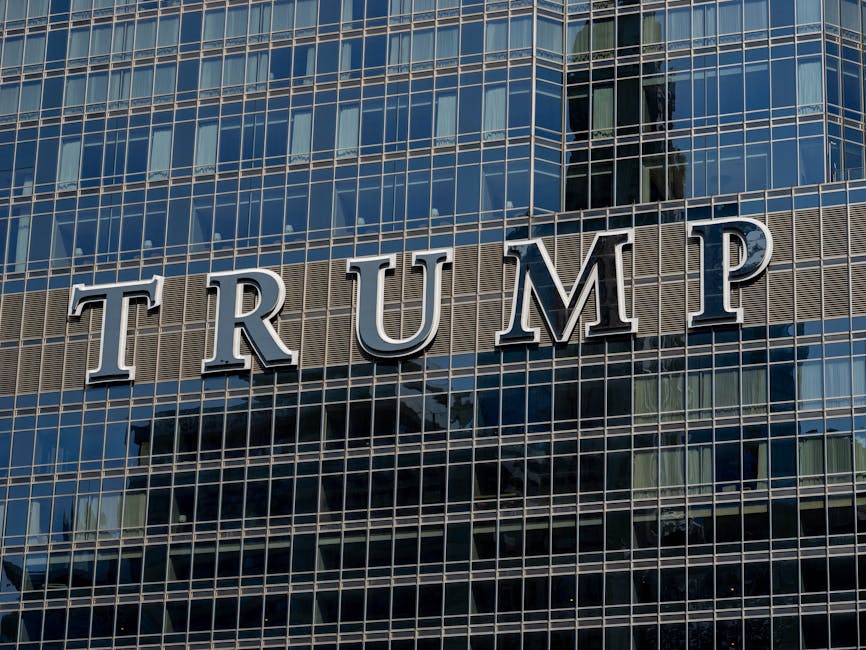
Image: GlobalBeat / 2026
Trump tax breaks shield president from IRS crackdown he once promoted
Muhammad Asghar | GlobalBeat
President Donald Trump’s administration has quietly exempted the Trump Organization from a new IRS audit program that targets real-estate developers who claim large depreciation deductions.
The shift in enforcement policy, which became public through agency memos released Tuesday, benefits a company that has reported $1.2 billion in depreciation write-offs since 2015 and has been under continuous audit since Trump’s first year in office. Internal revenue agents had been preparing to challenge several of those deductions before receiving orders in March to close the review, according to two IRS employees briefed on the matter.
Trump spent his 2024 campaign promising to “hammer” wealthy taxpayers who use depreciation to wipe out their federal bills. Two weeks after taking office he signed an executive order directing the Treasury to assemble “strike teams” focused on real-estate loopholes. Agency lawyers now say the order never applies to the president’s own holdings because they are held in revocable trusts whose income flows directly to him.
Treasury Secretary Scott Bessent signed off on the interpretation March 21, one day before IRS auditors were scheduled to question Trump Organization executives about $48 million in write-offs tied to commercial towers in New York and Chicago. The review was terminated without additional documentation, said Maria Alvarez, an IRS lobbyist in New York who said she was present when the decision reached the field office.
Alvarez told reporters that career employees were told “the White House counsel had determined the audit could present a conflict of interest because any additional tax owed would ultimately be reviewed by the Treasury secretary, who reports to the president.” She said staff interpreted the explanation as “a narrow carve-out” until they discovered the March memo also applies to any company in which the president held at least 10 percent ownership during the past decade.
The memo defines those enterprises as “covered entities” that are immune from the new strike teams until Trump leaves office or divests completely. Tax lawyers quickly realized the language protects not only the Trump Organization but also the president’s minority stakes in at least 14 limited partnerships that own hotels, golf courses and residential complexes from Hawaii to Scotland, according to an analysis prepared by American University law student journal Tax Notes Global.
White House spokesperson Karoline Leavitt said the policy follows advice from Justice Department attorneys who warned that pursuing back taxes could violate Justice rules against investigating a sitting president. “The memorandum is a pause, not a pardon,” Leavitt said. “All audits will resume the moment President Trump no longer holds office.”
The distinction means little to revenue agents who spent months building a case that Trump used aggressive valuations to shrink his taxable income below $1,000 in 2020 and 2021 despite statements on his financial disclosure forms that his businesses generated more than $400 million in cash those years. One specialist, who spoke on condition of anonymity because employees are barred from discussing taxpayer data, said the team had prepared $78 million in proposed adjustments before Treasury intervened.
Democratic lawmakers demanded an immediate reversal. Senator Ron Wyden of Oregon, who will take control of the Finance Committee if his party regains the Senate next year, called the exemption “a flashing neon sign that says rich people control the tax code if they can get elected.” He said he would request Government Accountability Office review of whether Treasury exceeded its authority.
House Republicans defended the administration. Ways and Means member David Schweikert of Arizona said critics ignore the legal risk of allowing auditors to pursue the president while his appointees supervise them. “No one would want the IRS knocking if the person who signs their paycheck can fire the agent’s boss tomorrow,” Schweikert said.
The controversy lands as Trump prepares to release his latest budget proposal that asks Congress to fund an extra 2,000 revenue agents focused on corporations and partnerships. Budget documents obtained by GlobalBeat show the administration expects the hires to bring in $59 billion over the coming decade, a forecast that relies on collecting more from developers who depreciate property faster than economic wear and tear.
Tax historians struggled to find a precedent for a president blocking audits of his own companies. Joseph Thorndike, director of the Tax History Project, said President Richard Nixon paid back taxes in 1974 after an IRS audit found he improperly donated his papers to charity, but Nixon did not halt the review. “What we have now is the executive branch telling the IRS it cannot examine the one taxpayer who happens to run the executive branch,” Thorndike said.
The American Bar Association’s tax section urged Treasury in a letter released Tuesday to insulate the IRS from White House interference by creating a three-member panel of former commissioners who would approve any decisions affecting the president’s returns or businesses. Treasury has not responded to the recommendation, according to association chair Janet Spragens.
“This is banana-republic territory. When the strong-man writes his own rules, nobody believes the collector knocking on their door has any legitimacy.”
— Senator Elizabeth Warren
Warren said she will introduce legislation requiring any president to place business assets in a blind trust or face automatic disclosure of IRS audit files to congressional tax committees. The measure has little chance of advancing while Republicans hold both chambers, but Warren argued public outrage could force GOP defections if additional carve-outs surface.
The episode could complicate Republican efforts to extend expiring portions of the 2025 tax overhaul that doubled depreciation deductions for commercial buildings. Party leaders had promoted those provisions as a way to jump-start construction jobs, yet images of the president avoiding the very audits he championed make that sales pitch tougher, said strategist Liam Donovan, who advises trade associations on tax strategy.
Financial markets showed little reaction. Shares of the two publicly traded real-estate investment trusts managed by Trump Organization executives edged up roughly 2 percent, roughly in line with broader indexes, as investors concluded the news had no effect on rent collections or occupancy rates.
Background
Presidential tax audits date to 1977 when the IRS instituted an automatic review of every return filed by a sitting president. The policy was not public knowledge until 2019 litigation over Trump’s refusal to release his returns. Agency guidelines say audits should continue “without regard to the taxpayer’s position,” but no statute prevents a president from ordering Treasury to change procedure.
Trump’s companies have claimed depreciation deductions worth more than $1 billion since 2010, according to financial statements obtained by House investigators. Depreciation allows owners to deduct a portion of a building’s cost each year, even when market values rise, because the tax code assumes structures eventually wear out. Critics argue developers abuse the rule by allocating inflated values to buildings while assigning much lower worth to land that cannot be depreciated.
What’s Next
Treasury’s inspector general has opened a review of whether agency officials followed ethics rules when drafting the carve-out. The probe is expected to wrap up before Congress returns from August recess, potentially forcing lawmakers to decide whether to strip the IRS budget provision funding the audit strike teams. Separately, the owner of a competing real-estate firm in Miami filed suit Wednesday arguing that the policy violates equal-protection guarantees by singling out Trump for favorable treatment.
Investors will also watch whether lenders lower their exposure to Trump-branded assets. Banks typically require borrowers to promise they will remain current on taxes, and any perception that the president’s businesses no longer face routine audit could raise covenant questions, according to credit analyst Margaret Greene at Fitch Ratings.
The bigger test may fall on voters next year. If Congress fails to act, the exemption will remain unless a new president rescinds it, leaving every rival developer to pay taxes under rules that may no longer apply to the most recognizable name in U.S. real estate.
Senior Correspondent, World & Geopolitics
Muhammad Asghar covers international affairs, conflict zones, and US foreign policy for GlobalBeat. He has reported on events across the Middle East, South Asia, and Eastern Europe, with a focus on the intersection of diplomacy and armed conflict. He has been writing wire-service journalism for over a decade.