University of Louisville Health Sciences Building (IMAGE)
University of Louisville releases new image of Health Sciences Building, showcasing state-of-the-art research and education facilities.
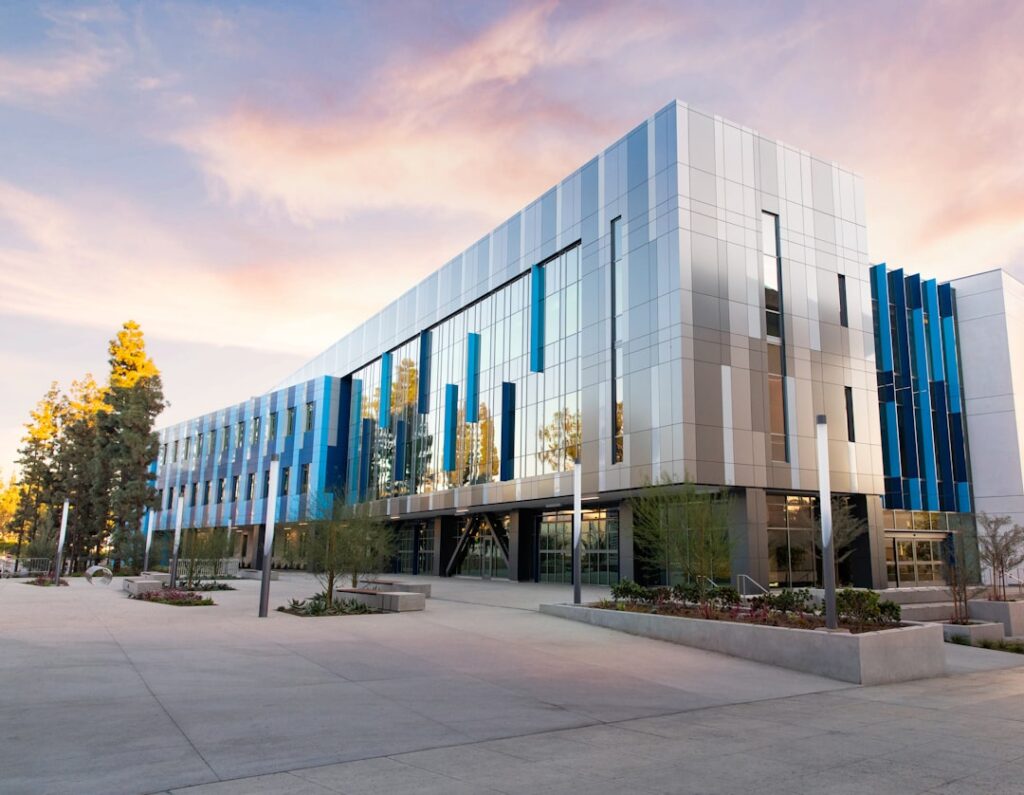
Image: GlobalBeat / 2026
University of Louisville Health reveals $205 million research hub downtown
Sarah Mills | GlobalBeat
University of Louisville Health opened a 10-story Health Sciences Building housing 900 researchers and students in downtown Louisville on Monday.
The $205 million tower consolidates labs that were scattered across five aging campuses and adds 50,000 square feet of传染病-grade workspace.
Kentucky has the nation’s third-highest cancer death rate and ranks 44th for heart disease survival. State officials bet the new facility will pull federal grants and private drug trials away from rival medical centers in Ohio and Tennessee.
“This building ends the brain drain,” Governor Andy Beshear told reporters during a ribbon-cutting outside the glass-and-copper façade. “Our graduates no longer have to leave to find cutting-edge labs.”
The university financed 70 percent of the project with municipal bonds backed by future hospital revenue. The remaining 30 percent came from a state allocation approved in 2022 after lawmakers learned St. Jude Children’s Research Hospital had recruited away 18 Louisville pediatric oncologists in 18 months.
Inside, robots shuttle blood samples along a ceiling rail to a biobank kept at -80 °C. A 19-Tesla MRI, one of 12 in North America, can detect a tumor 0.2 millimeters across. A level-3 containment suite lets scientists work with airborne viruses without the moon suits required at older BSL-3 sites.
Dr. Beth Riley, a pulmonary researcher who moved her 12-person team from a 1950s brick building three miles away, said the new airflow systems alone doubled her usable lab hours. “We used to lose entire experiments when the old HVAC shut down on weekends,” she said. “That won’t happen here.”
University brass are counting on the optics as much as the equipment. The building’s ground floor is glass-walled so pedestrians on South Hancock Street can watch researchers pipette under purple LED bars. Designers call it “science on display,” a deliberate attempt to court biotech conventions and venture capital summits.
Economic-development analysts project the tower will generate $380 million in outside research money over the next decade. The figure is realistic if the school can reach $100 million in annual NIH funding by 2029, said Tim Chapin, a Florida State University higher-education finance professor who reviewed the business plan. “Louisville is betting that real estate equals prestige, and prestige equals grants,” Chapin said.
Preliminary data suggest the gamble is already paying off. The university announced a $33 million NIH cancer-disparity grant in March, the largest in its history, after reviewers toured the unfinished labs. Pfizer signed a five-year lease for two floors where it will run obesity-drug trials, bringing 140 company employees downtown.
Not everyone is celebrating. The project displaced a 400-space parking lot that served a nearby homeless shelter. Cars now circle residential blocks for spots, and neighbors say traffic backs up to Interstate 65 at shift change. “They promised us a shuttle, then cut the budget,” said Tanya Williams, who lives across Muhammed Ali Boulevard. “We’re stuck with the horns at 6 a.m.”
Union carpenters also picketed last month when university subcontractors shipped prefabricated lab pods from Georgia instead of building them on-site. The university cited infection-control standards, but the local lost 50 jobs. “We wanted to work on the crown jewel and got told to stand outside,” carpenter Kevin Ortega said as he held a placard reading “Keep Louisville Labor.”
Background
The University of Louisville has chased research dollars since the 1990s, when tobacco-settlement money created a statewide endowment for medical studies. Its NIH funding peaked at $87 million in 2015, then slid below $60 million as faculty left for newer facilities at Ohio State and Vanderbilt.
Officials first floated a centralized science building in 2016 but shelved the plan after Governor Matt Bevin cut higher-education budgets 4.5 percent. The idea revived in 2020 when COVID-19 revealed the limits of the school’s decentralized labs. Researchers sequencing SARS-CoV-2 had to transport samples in coolers across town because no single site had both BSL-3 space and genome sequencers.
Kentucky’s general assembly approved $61 million in construction bonds in March 2021, weeks after the university’s hospital system posted its first operating surplus in five years. Groundbreaking took place in November 2022 on a surface lot the school had owned since the 1970s.
What’s Next
The university must still raise $45 million in private donations to outfit two unfinished floors earmarked for dementia and opioid-addiction institutes. Officials say naming rights are available for $15 million each, and they hope to announce donors by December so labs can open in 2027.
Technology & Science Editor
Sarah Mills is GlobalBeat’s technology and science editor, covering artificial intelligence, cybersecurity, public health, and climate research. Before joining GlobalBeat, she reported for technology desks across Europe and North America. She holds a degree in Computer Science and Journalism.