A New Idea to Save the AMOC? Dam the Bering Strait.
Scientists propose damming the Bering Strait to slow Arctic freshwater inflow and potentially stabilize the Atlantic Meridional Overturning Circulation, The New York Times reports.
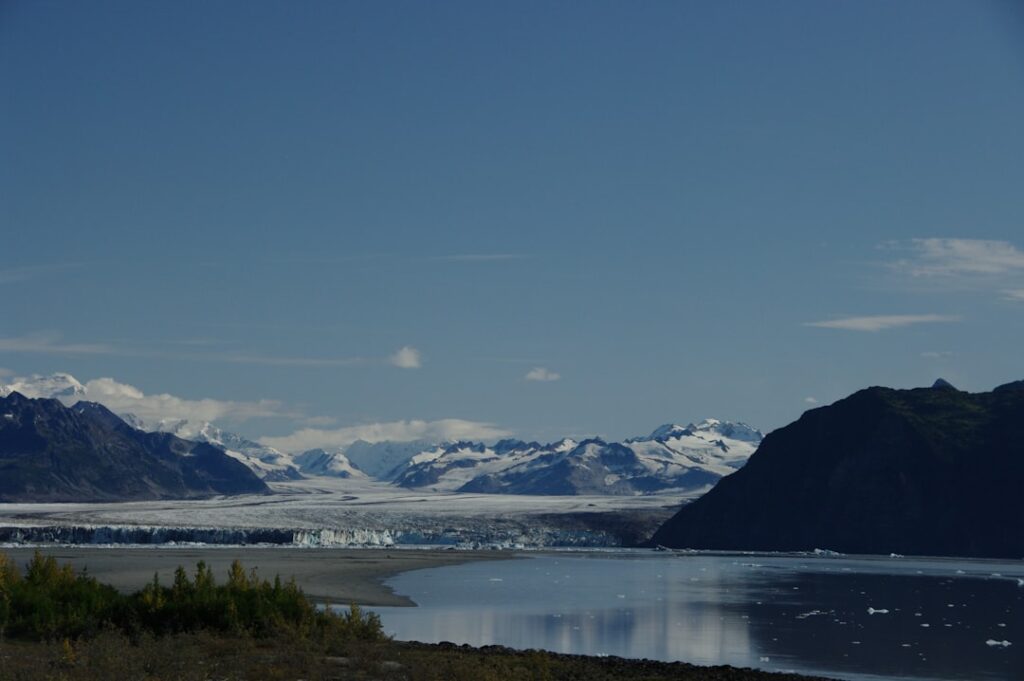
Image: GlobalBeat / 2026
Bering Strait dam proposed to stop AMOC collapse, scientists warn
By Muhammad Asghar | GlobalBeat
A radical proposal to build a 50-mile dam across the Bering Strait could prevent the Atlantic Meridional Overturning Circulation (AMOC) from shutting down this century, researchers announced Tuesday.
The $400 billion barrier would block Pacific water from flowing into the Arctic Ocean, restoring the density difference that drives the ocean conveyor belt. Modeling by the Potsdam Institute for Climate Impact Research shows the structure could delay AMOC shutdown by 200 years.
The AMOC moves warm water north and cold water south, keeping Europe temperate. Its collapse would drop temperatures across the continent by 5-15 degrees Celsius and disrupt monsoons affecting 2 billion people in Asia, Africa and South America. A 2023 study estimated the economic damage at $17 trillion worldwide.
The dam would rise 200 meters from the seafloor between Alaska and Russia, leaving a 50-meter gap at the top for ship traffic. Twin locks 500 meters long would handle the Bering Strait’s 1 million tonnes annual shipping volume. Construction would require 2.3 billion tonnes of concrete and steel, materials that would produce 350 million tonnes of CO2, equivalent to Germany’s annual emissions.
“We’re talking about the largest engineering project in human history,” said Dr. Stefan Rahmstorf, ocean physicist at Potsdam Institute. His team’s simulations indicate the barrier would reduce Arctic freshwater input by 70 percent, allowing salty Atlantic water to sink and maintaining circulation strength.
Russian officials immediately rejected any proposal requiring their territory. “This is fantasy,” said Kremlin spokesman Dmitry Peskov. “Russia will not participate in schemes that violate our sovereignty.” The strait divides US and Russian territorial waters exactly, requiring both nations’ consent under international law.
Alaska Native groups condemned the plan. “Our people have crossed these waters for 10,000 years,” said Eva Rexford, president of the Inuit Circumpolar Council Alaska. “A dam would destroy marine mammals we depend on and sever our cultural connection to Asia.” The region supports 80,000 bowhead whales, 250,000 walruses and 20,000 polar bears.
Environmental economists questioned the cost-benefit calculation. “Spending $400 billion on a dam when we could cut emissions for half that price is madness,” said Lord Nicholas Stern, author of the 2006 Stern Review on climate economics. Renewable energy investment of $200 billion would eliminate 5 gigatonnes of annual CO2 emissions, he noted.
The proposal emerged from desperation. AMOC strength has declined 15 percent since 1950, reaching its weakest point in 1,600 years according to ice core data. At current warming rates, the system could pass its tipping point between 2030-2070. Previous geoengineering suggestions included pumping massive amounts of salt into the North Atlantic or installing 10 million wind-powered mixers.
Background
The AMOC acts as a planetary thermostat, redistributing heat globally. Warm Gulf Stream water releases heat into northern latitudes, then sinks as it cools and becomes saltier. This deep water flows south, completing a cycle that moves 20 million cubic meters of water per second. The system drives weather patterns across four continents.
Scientists first warned of AMOC vulnerability in the 1980s. Ice age records show rapid temperature swings of 5-10 degrees Celsius within decades when circulation patterns shifted. Research vessels have measured increasing freshwater pooling in the North Atlantic as Greenland’s ice sheet melts, reducing water density and threatening the sinking mechanism.
What’s Next
The Potsdam team presents their findings to the European Geosciences Union conference in Vienna next month, seeking funding for detailed engineering studies. Without international cooperation, they warn, unilateral action becomes more likely as climate impacts intensify. The UN Climate Secretariat has scheduled emergency talks for September on ocean circulation threats.
Engineering challenges remain immense. Arctic construction seasons last 3 months. Ice scouring could destroy foundations. Storm waves reach 12 meters. Maintaining such infrastructure across an active seismic zone where the Pacific and North American plates meet adds another layer of complexity nobody has solved yet.
Senior Correspondent, World & Geopolitics
Muhammad Asghar covers international affairs, conflict zones, and US foreign policy for GlobalBeat. He has reported on events across the Middle East, South Asia, and Eastern Europe, with a focus on the intersection of diplomacy and armed conflict. He has been writing wire-service journalism for over a decade.