Iran War Live News Updates: U.S. Strikes Tankers Trying to Break Blockade, Awaits Iran’s Peace Plan Response
U.S. forces struck tankers breaching its naval blockade on Iran, Tehran silent on Washington’s demand for a peace proposal.
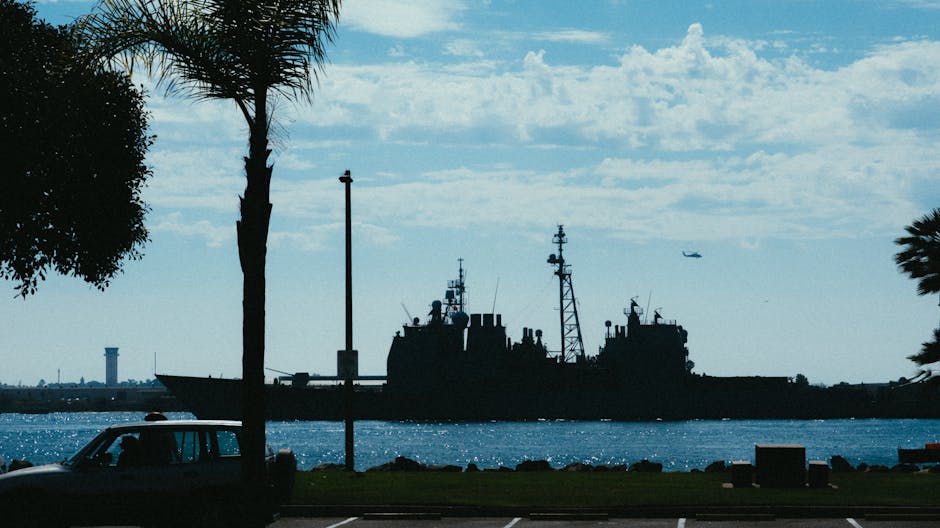
Image: GlobalBeat / 2026
U.S. strikes Iranian tankers defying Persian Gulf blockade as Tehran prepares peace plan response
By Muhammad Asghar | GlobalBeat
U.S. naval forces attacked at least 3 Iranian oil tankers attempting to breach the American-led maritime cordon in the Strait of Hormuz late Tuesday, opening the first direct naval exchange of the 3-week-old conflict, the Pentagon announced.
The tankers sustained heavy damage and one was left burning, though no immediate casualty figures were released by either side. The action marked a sharp escalation after Washington warned Tehran last week that it would use “all necessary means” to enforce sanctions aimed at cutting Iran’s oil revenue.
Iran’s Revolutionary Guard had tried to run the blockade in daylight, sending a convoy of 5 vessels south-east toward international shipping lanes. American destroyers fired warning shots before disabling 3 of the tankers with targeted strikes on their rudders and engines, U.S. Central Command said. Tehran called the attack “piracy” and vowed retaliation, but also signalled it would deliver a proposed peace framework to Washington within 48 hours through Omani intermediaries.
The incident pushed Brent crude up $4.60 to $97.80 a barrel, its highest level since October. Roughly 20 percent of globally traded oil normally transits the 21-mile-wide strait, but traffic has fallen by more than half since the United States and allies began interdicting Iranian vessels three weeks ago. Economists at BNP Paribas warned that a prolonged closure could add 1.5 percentage points to global inflation.
President Donald Trump, speaking to reporters at the White House, said the strike sent “a clear message” to Tehran. “We will not allow Iran to finance terror with oil money,” he said. When pressed on whether the United States would consider destroying Iranian offshore loading terminals, Trump replied: “Everything is on the table.”
Iran’s foreign ministry summoned the Swiss envoy who represents American interests in Tehran to protest what it termed “a naked act of aggression.” State television aired footage of flames engulfing the tanker Sabalan and quoted navy commander Rear Admiral Shahram Irani pledging to “teach the aggressors a bitter lesson.” Yet in a sign of competing impulses inside the regime, deputy foreign minister Ali Bagheri Kani told state radio that a 9-point peace proposal had been drafted and would be handed to Oman on Wednesday.
A European diplomat in Muscat, speaking on condition of anonymity, said the Iranian plan includes a phased reduction of uranium enrichment to 3.67 percent, caps on ballistic-missile ranges and the possibility of multinational talks on regional security. In exchange Tehran wants an immediate lifting of oil sanctions, access to $10 billion in frozen assets abroad and security guarantees that neither the United States nor Israel will pursue regime change.
The Biden administration had imposed the maritime sanctions after Iran-backed militias killed 7 U.S. soldiers in a drone strike on a base in Jordan. Rather than launch a ground invasion, Trump chose to strangle Iran’s oil income, which provides roughly 70 percent of government revenue. TankerTrackers.com estimates Iranian exports have dropped from 1.5 million barrels per day to fewer than 300,000 since the blockade began.
Background
This is the first time since the 1988 Tanker War that the United States has fired on Iranian commercial vessels. During that conflict, part of the broader Iran-Iraq war, the U.S. Navy conducted Operation Praying Mantis, sinking two Iranian warships after an American frigate hit a mine. Washington reflagged Kuwaiti tankers to protect energy flows, setting a precedent for direct naval involvement.
The stakes are higher now. Iran’s fleet of approximately 60 very-large crude carriers and smaller ships has become the country’s financial lifeline, moving oil to China via shadow networks that switch off transponders and falsify documents. Beijing, already stockpiling cheap crude, condemned Tuesday’s strike but gave no indication it would join sanctions. State refiners Sinopec and Zhuhai Zhenrong have continued to receive Iranian barrels discharged outside Chinese waters by third-party traders.
What’s Next
Markets will watch Tehran’s response as much as Washington’s next move. Iranian officials told Reuters that small fast boats could harass commercial traffic under foreign flags, a tactic used in 2019 when mines damaged vessels near Fujairah. The Pentagon has already deployed additional minesweepers and a second carrier group, meaning any retaliatory mining campaign would risk wider clashes. Back-channel talks through Muscat could provide an off-ramp, yet both capitals face domestic pressure to appear unbowed.
Analysts say the 48-hour window for Iran’s peace offer may decide whether the Persian Gulf remains open or becomes a no-go zone for insurers, a scenario that would force European and Asian importers to seek costlier alternative routes. Shipping giant Maersk said it has rerouted 3 container services around the Cape of Good Hope, adding 10 days to Asia-Europe transit times. With global diesel stocks at their lowest seasonal level since 2008, even a limited Iranian counter-strike could send retail fuel prices past $5 a gallon in the United States just as the summer driving season begins.
Senior Correspondent, World & Geopolitics
Muhammad Asghar covers international affairs, conflict zones, and US foreign policy for GlobalBeat. He has reported on events across the Middle East, South Asia, and Eastern Europe, with a focus on the intersection of diplomacy and armed conflict. He has been writing wire-service journalism for over a decade.