Iran war live: Tehran warns US of ‘surprises’; Xi, Putin meet in Beijing
Iran threatens U.S. with “surprises” amid Mideast tensions, as Xi and Putin hold talks in Beijing to deepen China-Russia alignment.
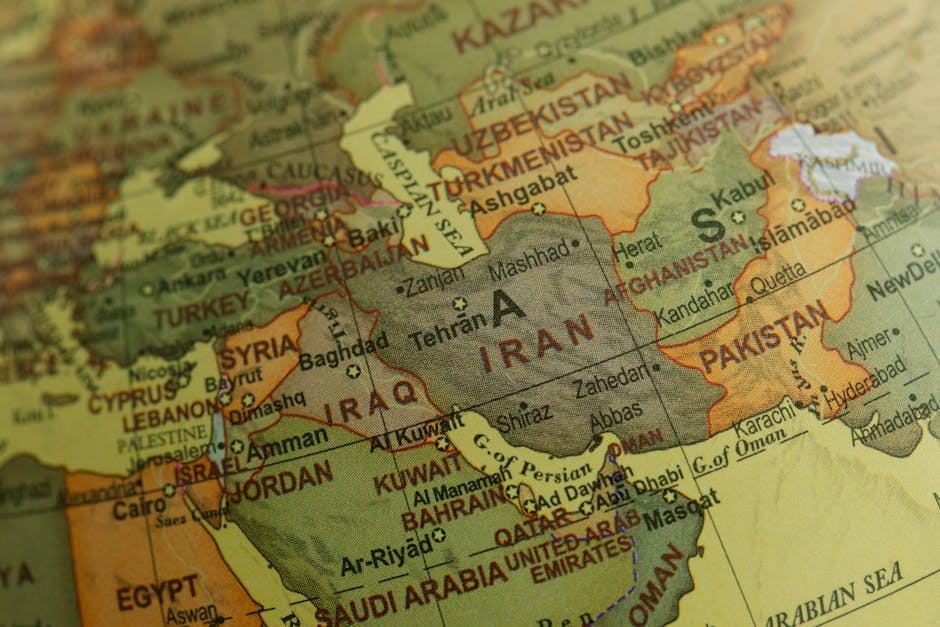
Image: GlobalBeat / 2026
Iran war escalates: Tehran warns Trump of ‘surprises’ as Xi meets Putin in Beijing
By Muhammad Asghar | GlobalBeat
Iranian Supreme National Security Council chief Ali Akbar Ahmadian warned the United States to expect “surprises” in a televised speech Thursday night as tensions surged following US airstrikes on Iranian military sites.
Ahmadian spoke hours after Chinese President Xi Jinping and Russian President Vladimir Putin concluded closed-door talks in Beijing, raising Western fears the two powers might coordinate backing for Iran in the widening conflict.
The White House confirmed earlier Thursday that US forces hit more than 30 targets across western Iran in a “defensive” operation ordered by President Donald Trump after Iran launched missile attacks on US assets in Iraq earlier this week. At least 16 Iranians died in the strikes, according to Iran’s Revolutionary Guard.
The IRGC responded by claiming responsibility for a drone attack on Al-Asad Airbase that wounded at least 16 US military personnel. A spokesperson said Iran “stands ready to deliver more decisive blows if US aggression continues.”
Western capitals are watching the Russia-China talks for signs that Tehran might receive diplomatic cover or military assistance. Putin arrived in Beijing at Xi’s invitation late Wednesday, his first foreign visit since returning to the Kremlin for a new term.
Kremlin aide Yuri Ushakov told reporters that Iran was “a natural topic” in the leaders’ two-hour private meeting. He added that both sides expressed “deep concern over foreign meddling” in the region.
Neither Xi nor Putin has publicly endorsed Iran since the US raids began. Asked whether Russia would arm Iran, Ushakov said conversations would “stay secret for now.”
The flurry of diplomacy accompanies intense fighting on the ground. Social-media videos verified by GlobalBeat showed columns of black smoke rising over Kermanshah, home to a major IRGB ballistic-missile depot. Electricity was cut across the city after what residents said were massive blasts before dawn.
Kermanshah resident Mohammad Reza, 42, told GlobalBeat by phone that the sky lit up at 4:30 a.m. “You couldn’t tell what was hitting us. I just grabbed my kids and headed to the basement,” he said. Hospital officials confirmed 14 civilian injuries.
US Central Command admitted carrying out strikes on “missile storage facilities and command posts used for planning attacks on US forces.” The IRGC said its retaliation would hit “nodes America never expected.”
Trump addressed US troops at Fort Liberty early Thursday, pledging “no boots on the ground but total air advantage.” Speaking to reporters afterward, he reiterated that Washington does not seek regime change in Tehran but vowed to keep launching strikes if Iran targets US positions.
European allies urged restraint. French President Emmanuel Macron called for “a de-escalation path through diplomacy,” while British Prime Minister Keir Starmer’s office urged “both sides to respect international humanitarian rules.”
But Washington brushed aside mediation offers. Secretary of State Marco Rubio, at the State Department, said the United States “is in a defensive posture” and criticized European efforts as “premature while bombs still fall on our soldiers.”
Energy markets reacted immediately. Brent crude surged past $90 per barrel for the first time since late 2023, adding 4 percent in a single session. Analysts cite risk to the 21 million barrels that flow daily through the adjacent Strait of Hormuz.
Israel has largely stayed on the sidelines. Prime Minister Benjamin Netanyahu convened his Security Cabinet but issued no public threat to Iran. Israeli Channel 12 reported Netanyahu authorized intelligence sharing with the US but refused a direct role for the Jewish state.
The Arab League scheduled an emergency session Tuesday in Doha. Gulf nations, which host large US bases, worry Iran could widen attacks to include proxy militias in Yemen. Saudia Arabia’s foreign ministry urged calm after Houthi rebels promised “thousands of martyrs” would retaliate for the strikes.
Background
Iran and the United States have edged toward open war since Trump exited the 2015 JCPOA nuclear agreement in his first term. Sanctions pushed Iranian oil exports close to zero, draining state revenue and eroding the value of the rial. Tehran responded by expanding its enrichment program and backing regional militias, arguing its security remained under threat.
Tensions cooled briefly in 2024 after both governments spoke informally about a phased return to nuclear limits. That thaw destabilized with the re-election of a conservative Iranian parliament last year and Trump’s triumph in 2024, ending hopes of a revived deal.
Direct clashes began this month when the IRGC targeted a CIA safe house in Erbil, Iraq, killing 3 intelligence contractors. The Pentagon retaliated with strikes on militia bases along the Iraqi-Syrian border. Iran then shelled Al-Asad for four consecutive days, bringing the current cycle of airstrikes inside Iranian territory.
What’s Next
CENTCOM said at least two carrier strike groups “will remain forward deployed” in the Persian Gulf for the next several weeks. European officials tell GlobalBeat they expect the Security Council to hold closed consultations as early as Monday following requests by France and Britain. Iran’s parliament is slated to hold a closed-door briefing Friday morning with General Esmaeil Qaani, commander of the IRGC’s foreign operations wing.
The Biden administration showed cautious optimism Thursday that its measured bombing campaign “should get Iran’s attention,” according to US Defense Secretary John Roberts. So far Iran’s leadership has offered no equivalent to the 2020 IRGC strike that killed 11 US contractors but instead is publicizing its capacity to “hit US troops whenever it decides.”
Tehran also remains dependent on Chinese purchases of its discounted crude, providing Xi powerful leverage to avert a fuller conflagration. Market analysts warn any sign of Chinese back-channel rescue efforts could cap further oil spikes, while a deepening Iran-Russia alignment would raise risks for NATO’s eastern flank and prompt expanded sanctions from Washington on both Moscow and Beijing.
Senior Correspondent, World & Geopolitics
Muhammad Asghar covers international affairs, conflict zones, and US foreign policy for GlobalBeat. He has reported on events across the Middle East, South Asia, and Eastern Europe, with a focus on the intersection of diplomacy and armed conflict. He has been writing wire-service journalism for over a decade.