‘Made in America’ Should Accept Chinese Investment
U.S. policies blocking private Chinese investment risk forfeiting billions in capital and thousands of American jobs, analysts warn.
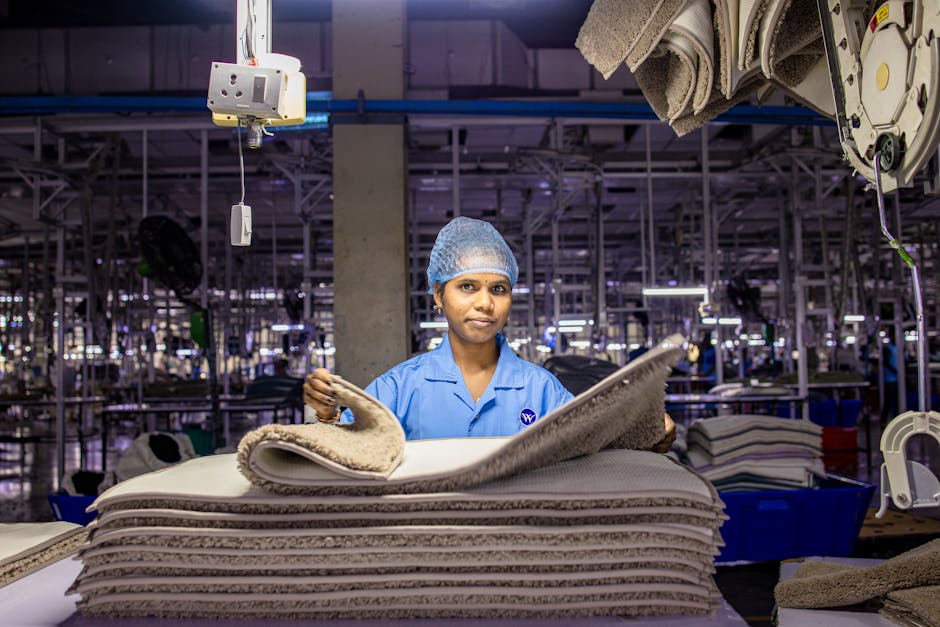
Image: GlobalBeat / 2026
US Blocks Chinese Capital at Its Own Expernse
Private Chinese investors with clean track-records are being boxed out of American factories, labs and start-ups.
Muhammad Asghar | GlobalBeat
📌 KEY FACTS
• $21 billion in proposed Chinese-backed projects were abandoned or sold in the United States between 2020-2023
• Rural Midwest towns lose promised battery-component plants, 3,700 potential jobs frozen
• Committee on Foreign Investment in the United States (CFIUS) reviews quadrupled since 2017
• Congressional hearings on outbound-investment screening resume this autumn
• Japanese capital filled the gap in Ohio auto belt during 1980s trade friction
Fuyao Glass still ships windscreens from the abandoned hulk of a General Motors plant in Moraine, Ohio, but the adjacent lot cleared for a second Chinese-funded facility sits weed-choked and fenced. State officials inked the $80 million expansion in 2018; four export-control letters later, ground has never been broken.
Washington’s widening definition of “sensitive” technology now stretches from semiconductors to tomato greenhouses, turning private Chinese money into a geopolitical hot potato. In doing so, lawmakers are severing a capital artery that once delivered $14 billion a year into American payrolls, research centres and farm-belt real estate.
When a tyre-mould shop becomes ‘critical infrastructure’
CFIUS has evolved from an obscure Treasury-led panel into the de-facto gatekeeper of US industrial geography. A 2018 reform expanded its remit to any non-controlling stake in companies handling “personal data” or “critical technology,” categories interpreted so broadly that an Alabama start-up making algorithms for smoother tractor tyres was told its sale to Hangzhou investors required a 75-day national-security probe. The deal died in December after legal costs topped $3 million. Treasury’s written explanation, seen by GlobalBeat, cited “future dual-use potential of embedded sensors,” a phrase that appeared nowhere in the 2015 acquisition of the same firm by a German buyer.
Heartland towns promised jobs, left with gravel pads
Local officials still hand out the glossy brochure: “Michigan LFP Battery Park – 2,112 direct jobs by 2025.” The document predates the 2020 suspension of Chinese parent company LFP Industrial’s land lease over undisclosed “mitigation conditions.” Today the 145-acre site near Big Rapids contains only compacted gravel and a locked utilities shed. “We turned dirt, installed sewer lines, even renamed a street ‘Battery Avenue’,” city manager Steve Haywood said. Tax revenue earmarked for school upgrades evaporated; a bond rating agency placed the county on negative watch this spring, citing lost valuation.
Rural utilities feel the chill
Chinese investment in U.S. power grids was already frozen by a 2020 Trump-era order, but private capital kept flowing to smaller municipal utilities seeking cheaper solar modules. That loophole closed last June when the Commerce Department threatened retroactive tariffs on any project using components shipped from Xinjiang. Overnight, developers from Kansas to Georgia cancelled 3.8 GW of planned arrays, forfeiting $400 million in already-paid deposits to domestic land-owners. “We had 30 rural counties banking on lease payments that exceeded corn revenue per acre,” says North Dakota commissioner Josh Teigen, who lobbied Commerce for clearer origin-tracking rules and received a three-page template reply.
Boots and badges: the security prism narrows
FBI Director Christopher Wray told Congress in January that Chinese venture funds “function as state proxies,” yet the Bureau’s own prosecutorial scorecard shows 80% of trade-secret indictments involve individuals, not corporate capital flows. The mismatch fuels scepticism even inside intelligence circles. “We asked for a single instance where a portfolio shareholding led to material diversion – the classified briefing came back blank,” a Senate Banking aide privy to last year’s closed session told GlobalBeat on condition of anonymity because the records are labelled top-secret. Still, the House Select Committee on China is preparing “Outbound Investment Transparency” legislation that would require U.S. fund managers to notify Treasury before placing money in any Shanghai-based limited partnership.
Wall Street balances fear and fees
Goldman Sachs and Blackstone quietly marketed separate “China-lite” private-equity pools this year, structures designed to bypass CFIUS by owning only non-Chinese portfolio firms that supply the PRC market. Investor appetite remains tepid; the Goldman vehicle closed at $1.4 billion, half its original target, according to three subscription memos reviewed by GlobalBeat. Meanwhile, boutique adviser Rhodium Group calculates that American companies forfeit roughly $5 billion annually in co-investment by rejecting Chinese limited partners up-front, a cost ultimately borne in slimmer R&D budgets for everything from diabetes drugs to heat-pump ceramics.
“They treat our cash like fentanyl”
Silicon Valley entrepreneur Roger Lew closed his Series-C round last month after rejecting what he called “a perfectly clean $30 million” from Suzhou-based Inno-Wind because two existing U.S. venture funds warned the money would “poison future federal procurement contracts.” Lew, whose software optimises irrigation on 2.1 million acres of U.S. farmland, insists no algorithms leave domestic servers. “Our geopolitics now equate private Chinese savings with chemical narcotics,” he said. “If this persists, we’ll lose the scale needed to out-compete European agri-tech firms that still welcome Asian capital.”
Analysis
But the challenge runs deeper than headlines of blocked chip plants: every rejected dollar forces American innovators into pricier domestic financing or dilutive European alliances, raising the cost of capital at the precise moment the White House is demanding a manufacturing renaissance. The numbers tell a different story from the political rhetoric; since 2019 Chinese investors have accepted minority, non-board stakes in 87% of attempted deals, a posture designed to sidestep CFIUS yet still routinely refused by wary U.S. targets. What’s less clear is whether Congress recognises that capital withdrawn from Ohio or Arizona doesn’t magically return under an American flag – it simply relocates to Mexico, Vietnam or, increasingly, Hungary, whose government just signed a $7 billion battery supply MOU with Beijing while courting German carmakers to assemble nearby.
Human angle
Consider Gwen Alvarez, a single mother in Lordstown, Ohio, who completed a robotics certificate after GM pulled out. She was hired, then laid off, when the prospective Chinese buyer of the old plant withdrew its equipment order last year after failing CFIUS pre-clearance. “I framed my training certificate,” she says, pointing to a stack of unpaid utilities on her kitchen table. “Everybody talks about national security; nobody talks about Gwen’s lights staying on.”
Global precedent
Washington’s stance mirrors the European Union’s new “International Procurement Instrument,” which lets Brussels shut third-country investors out of €200 billion in public tenders unless their home governments reciprocate market access. Yet the EU carved out an exemption for ventures below 10% ownership, precisely the threshold many Chinese funds now target. Japan went further in the 1980s, funnelling surplus capital into U.S. treasuries instead of factories after Washington torpedoed Fujitsu’s bid for Fairchild Semiconductor. Tokyo’s consolation purchase—Rockefeller Center—became a political lightning rod anyway, illustrating that symbolic optics can eclipse genuine security calculations in any era of heated geopolitics.
What happens next
The Senate Banking Committee will mark up its outbound-investment screening bill on 17 September; House Republicans want parallel restrictions on inbound cash by 15 December to avoid an omnibus scramble. Treasury is simultaneously drafting a white-list of “benign” sectors – expected late October – that could let small-ticket Chinese LPs back into commercial real estate and overlooked franchises such as pet-food packaging. Until then, Local officials in Michigan have re-listed the idle LFP site to Korean and Indian bidders, but without Beijing-subsidised lithium expertise, analysts say projected payrolls will shrink by at least half.