‘Dangerous escalation’: World condemns Iran after attacks on UAE
Global powers denounce Irans strikes on UAE as dangerous escalation, urging restraint amid heightened Gulf tensions.
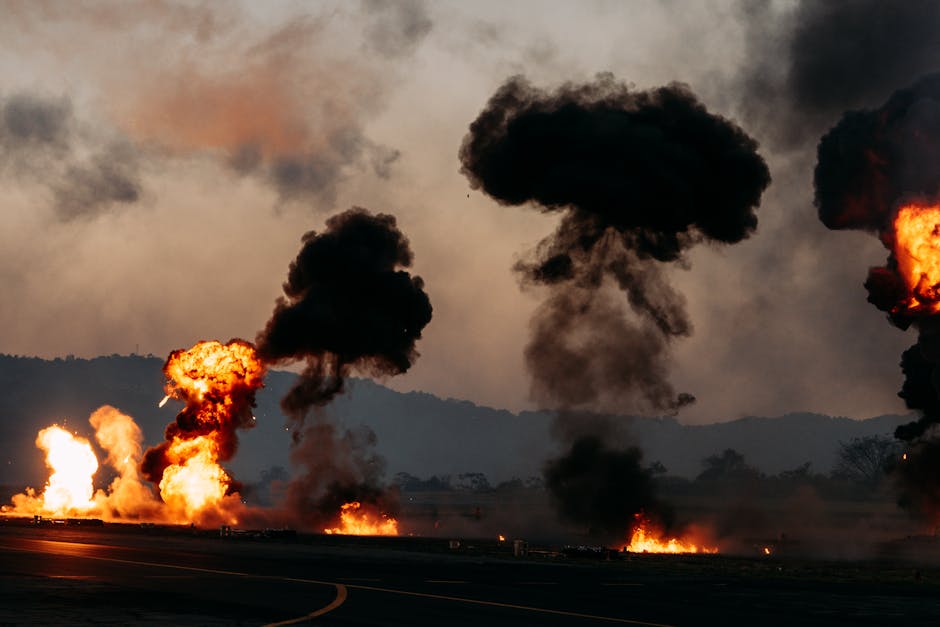
Image: GlobalBeat / 2026
Iran attacks UAE: Global powers condemn strikes as oil prices surge 4%
Muscat, Oman — Iran launched drone strikes on Abu Dhabi’s oil infrastructure, killing 6 workers and triggering international condemnation.
The attacks targeted state-run ADNOC facilities near Jebel Ali port and caused the Strait of Hormuz to partially close, according to briefings by the UAE energy ministry.
Tehran signaled further retaliation. Washington pledged defense support. European leaders demanded an emergency UN session.
White House Press Secretary Alex Guillen said Trump authorized what she called a “wide-spectrum” response including additional fighter jets to Al Dhafra air base. She gave no timeline.
Gulf stock markets tumbled. Dubai’s DFM dropped 2.8%. Brent crude futures added 4.2% to $80.65 a barrel, the biggest single-day climb since August, energy tracker Ice Futures reported.
British Prime Minister Keir Starmer branded the operation a “reckless escalation” and announced naval assets would transit Hormuz under UK command within 48 hours. He spoke to ITV News outside Downing Street.
French President Emmanuel Macron summoned Iran’s ambassador in Paris. A foreign ministry statement denounced “indiscriminate strikes on civilian infrastructure.”
In Abu Dhabi, emergency teams battled refinery fires near Musaffah industrial zone. The UAE health authority said 14 people were hospitalized with smoke-related injuries.
Iran’s Revolutionary Guard issued a one-line Telegram post claiming it was in “deterrence mode” after alleged Emirati intelligence cooperation with Israel. It provided no evidence.
China’s foreign minister Wang Yi urged restraint in separate calls with Tehran and Abu Dhabi. The Chinese foreign ministry offered to mediate if both sides agreed.
Oil traders scrambled for options cover. Vitol executive president Mike Muller told Bloomberg TV the market now prices a “constant terror premium” of $8 a barrel into Gulf supply.
Insurance group Lloyd’s of London said underwriters were excluding war-risk coverage on routes within 40 nautical miles of Emirati shores, citing “heightened kinetic threat.”
Dubai’s Emirates airline rerouted Australia and New Zealand flights around Iranian airspace, extending flight time by 35 minutes. Budget carrier flydubai canceled 22 services, its website showed.
Lebanon’s Hezbollah praised what it called “resistance to Emirati aggression in Yemen” while condemning civilian deaths. The group’s media office released the statement in Beirut.
Riyadh put its own oil installations on high alert. Saudi energy minister Abdulaziz bin Salman told reporters the kingdom “would not absorb any regional void and will protect its assets.”
Background
Iran versus the UAE tension centers on the Abraham Accords, the 2020 US-brokered deal under which Abu Dhabi recognized Israel. Tehran branded the pact a betrayal of Palestinians and repeatedly promised payback.
Both nations sit astride the Strait of Hormuz, a passageway for 20% of seaborne oil. Past confrontations included mining of tankers in 2019 and the seizing of a South Korean vessel by Iran’s navy in 2021. Escalation cycles typically follow US sanctions tightening or Israeli strikes on Iranian proxies across the region.
What’s Next
US Secretary of State Marco Rubio arrives in Abu Dhabi Thursday for crisis talks with President Sheikh Mohamed bin Zayed. The UN Security Council scheduled a closed session Friday after Britain and France circulated a draft resolution demanding “transparency on targeting data” from Iran.
Unresolved Hormuz patrol rotations and European naval deployments signal months of higher freight costs and nervous reinsurance markets. Container shipper Maersk warned of a Suez-style diversion around Africa if tanker premiums remain elevated through the winter.
Senior Correspondent, World & Geopolitics
Muhammad Asghar covers international affairs, conflict zones, and US foreign policy for GlobalBeat. He has reported on events across the Middle East, South Asia, and Eastern Europe, with a focus on the intersection of diplomacy and armed conflict. He has been writing wire-service journalism for over a decade.