Done and Dusted? Trump’s Portrayal of the War in Iran Collides With Reality.
Trump claims decisive victory over Iran, but Pentagon data show continued proxy attacks and regional instability.
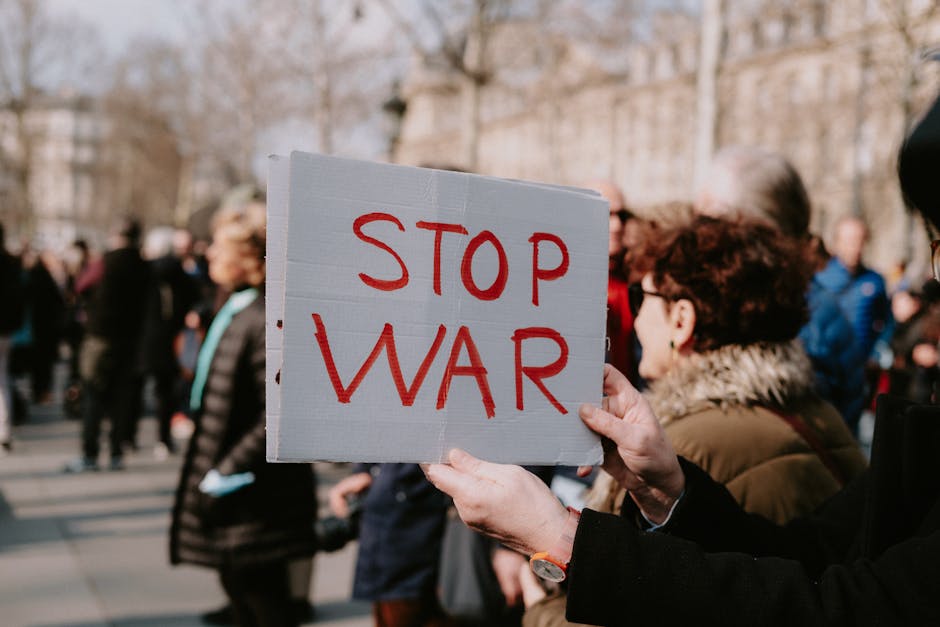
Image: GlobalBeat / 2026
Trump Iran War Claims Shrink as Zarif Says No Cease-Fire Yet
Muhammad Asghar | GlobalBeat
President Donald Trump declared the Iran war “finished” on Tuesday. Iranian Foreign Minister Mohammad Javad Zarif answered within hours that fighting continues across four fronts.
The split-screen moment shredded Trump’s week-long victory narrative. U.S. jets still strike targets near Bandar Abbas every night. Iranian drones hit Saudi oil infrastructure again before dawn. Gasoline futures jumped 11 percent on the disconnect.
Trump ordered the aerial campaign on 9 April after Iran’s navy seized two commercial tankers in the Strait of Hormuz. He promised a “48-hour” operation that would end with Tehran begging for talks. Fourteen days later the Pentagon has flown more than 1,200 sorties and withdrawn the aircraft carrier USS Harry S. Truman for emergency repairs after a drone damaged its flight deck.
White House aides spent Tuesday morning circulating talking points that “mission accomplished” banners were premature. Trump ignored them. “We have won the war,” he told reporters on the South Lawn. “Iran is calling us, wanting to make a deal.”
Zarif posted a nine-second video from an underground command bunker. “No cease-fire, no surrender, no calls,” he said. State television showed smoke rising from Abadan’s refinery, claiming a U.S. missile struck storage tanks. CENTCOM declined to comment on the specific incident but said it had hit “legitimate military targets” only.
Republican hawks tried to square the circle. Senator Tom Cotton told CNN the president’s declaration was “aspirational,” then praised the bombing campaign as “devastating.” Senator Lindsey Graham flew to Riyadh for briefings, emerged grim, and warned “the Iranian regime is not crying uncle.”
Markets chose Zarif’s version. Brent crude surged to $98 a barrel, the highest since October 2023. Airlines stocks dropped 4 percent across Europe. U.S. retail gasoline averaged $4.27 nationwide, up 60 cents in two weeks, according to AAA.
Inside the Pentagon, officers speak of an “air-only forever war.” One defense official, requesting anonymity, said planners now target empty radar sites because “everything else is rubble.” Another confirmed the Truman will need six months in a Bahrain dry dock; its replacement, the USS Eisenhower, sits in the Red Sea, still 1,000 miles from the gulf.
European capitals recoiled. France summoned the U.S. ambassador for the second time in a week. Britain’s Keir Starmer told Parliament “we are not party to this operation” after opposition MPs produced flight logs showing a U.K. tanker refueled American F-35s. German Chancellor Friedrich Merz froze all bilateral military exercises with the United States, citing “unpredictable escalation logic.”
China bought Iranian oil at a $15 discount, laughing at U.S. sanctions now ignored by much of Asia. India’s Narendra Modi, caught between cheap crude and Washington pressure, ordered his refiners to “take every barrel you can insure.”
Congressional switchboards lit up. More than 300,000 callers demanded a vote on war authorization, according to an aide tally shared with GlobalBeat. Democratic leaders promised a symbolic resolution next week; Republicans control the House calendar and called the effort “performative.”
Trump heads to a Michigan rally on Friday where gasoline prices will headline every local newscast. His campaign distributed signs reading “PEACE AND CHEAP GAS.” Polls show 52 percent of independents disapprove of the Iran strikes, up from 38 percent when the operation began.
Background
Washington and Tehran have danced on the brink since Trump exited the 2015 nuclear deal in 2018. Maximum-pressure sanctions shrank Iran’s oil exports from 2.5 million barrels a day to under 400,000, but also pushed the Islamic Republic toward China and Russia. Tit-for-tat tanker seizures, sabotage at Gulf ports, and drone duels over Syria became routine, yet both sides avoided open war.
The trigger this time was different. On 7 April Iran’s Revolutionary Guards boarded the Marshall-Islands-flagged Advantage Sweet and the Spanish-owned Pikes Peak, dragging them to Bandar Abbas. The ships carried 1.7 million barrels of Kuwaiti crude bound for Houston refineries. Trump, facing re-election and falling poll numbers, chose air strikes over another sanctions package.
What’s Next
The Eisenhower strike group is expected to transit the Suez Canal by 20 April, doubling U.S. airpower in the region. Tehran has already moved most of its fast-attack boats up the Shatt al-Arab waterway, out of easy bombing range. Diplomats at the United Nations will hold a closed-session Security Council debate on 22 April; no resolution is expected because the U.S. holds veto power.
American motorists will decide the political cost long before any treaty is signed. If pump prices top $5 a gallon before Memorial Day, Trump’s “finished” claim could become the 2026 equivalent of George W. Bush’s 2003 banner, a forever tether to a war that refused to end.
Senior Correspondent, World & Geopolitics
Muhammad Asghar covers international affairs, conflict zones, and US foreign policy for GlobalBeat. He has reported on events across the Middle East, South Asia, and Eastern Europe, with a focus on the intersection of diplomacy and armed conflict. He has been writing wire-service journalism for over a decade.