Flesh-eating parasitic fly once eradicated from US now near the border
Flesh-eating New World screwworm fly, eradicated from U.S. in 1982, detected 30 miles from Texas border, USDA confirms.
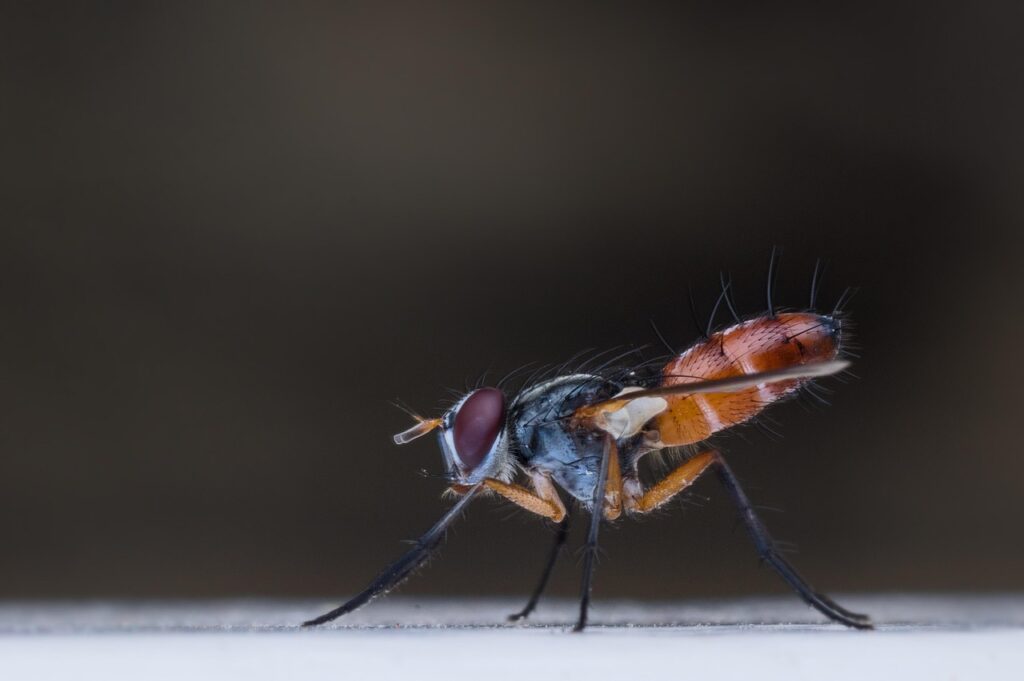
Image: GlobalBeat / 2026
Flesh eating fly returns to US doorstep after 35-year eradication
Muhammad Asghar | GlobalBeat
The flesh-eating New World screwworm fly has reappeared 200km south of the Texas-Mexico border after being declared eradicated from the United States in 1982.
A confirmed outbreak in Colima state has infected 61 animals since February, Mexican agriculture officials confirmed late Monday.
The parasite larvae burrow into living tissue, feeding on muscle and blood for up to 7 days before dropping to pupate in soil. Cattle wounds resemble drilling sites. Untreated, infestations kill within 2 weeks. Mexico has spent decades pushing the insect southward through coordinated sterile-fly releases; the last Texas case was recorded in 1982.
Veterinary teams found the first infested calf on February 12 near Tecomán, Colima, José Luis Calderón, director of animal health at Mexico’s National Service for Agro-Food Health, Safety and Quality (SENASICA), told reporters. Genetic tests matched the strain to Central American populations rather than residual Mexican pockets, suggesting northward movement on livestock trucks or wildlife corridors. Since then infections spread to six municipalities, reaching the Pacific coastal plain 190km south of Guadalajara and roughly the same distance from Texas.
Calderón said 52 infected cattle, 5 dogs, 2 goats, 1 pig and 1 horse have been documented, with 12 animals euthanized after treatment failed. Field crews have treated 1,820 potentially exposed livestock with larvicide and antibiotic sprays, then released 5 million sterilized male flies weekly across 7,000km² to swamp breeding females. The strategy mimics the US-Mexico program that eliminated the insect north of the Isthmus of Tehuantepec during the 1980s, but budgets have fallen 30 percent since 2020, according to SENASICA records.
US Department of Agriculture officials convened an emergency teleconference Tuesday afternoon after the Mexican alert crossed their desks. “We are treating this as a high-consequence re-introduction threat,” Mike Watson, deputy administrator for USDA’s Animal and Plant Health Inspection Service, told GlobalBeat. The agency has reopened a screwworm operations manual untouched since 2016 and placed fly identification laboratories in Laredo, McAllen and Del Rio on 48-hour sample turnaround. Texas Animal Health Commission patrols have doubled inspections of livestock entering at 29 border bridges; every head of cattle, horse, goat, sheep and dog now receives wound checks before USDA clears the truck for US highways.
Texas cattlemen remember the last invasion. “One case closes the border,” warned Jason Berry, manager of 4,000-head Berry Brothers Ranch outside Eagle Pass. During the 1966 outbreak his father watched market prices collapse overnight; this week feeder-cattle futures dipped 1.8 percent on early rumors before rebounding. Berry spent Tuesday afternoon photographing every calf on the ranch; wounds must be reported within 24 hours under revived state rules. “We’re one fly away from quarantine. That’s not drama, that’s history,” he said.
The parasite’s biology amplifies danger. A single fertilized female lays 250 eggs along wound edges; larvae hatch within 12 hours and secrete enzymes that enlarge lesions, attracting more flies. Cattle bunch in shade, spreading spores through direct contact. Wind can carry adults 300km in three days, USDA entomologists calculated in a 2021 risk model. From Colima the distance to Laredo is 850km; analysts say truck-borne livestock could bridge half that in 24 hours, leaving a 400km ecological gauntlet where surveillance gaps exist.
Mexico has asked the United States for 50 million extra sterile flies on top of the 20 million already budgeted for 2026. USDA officials told reporters they can supply 35 million within six weeks but need congressional notification to tap emergency funds for more. Shipping begins this weekend from the Panama production plant reopened after 2018 hurricanes; the facility can churn 200 million pupae weekly when fully staffed, manager Erica Ng confirmed by phone. Whether Congress allocates money quickly remains unclear. House Agriculture Committee chair Glenn Thompson told reporters he supports fast-track supplemental funds but wants a cost-sharing formula written into any package.
Wildlife authorities fear the fly could establish in south Texas deer herds, creating an uncontained reservoir. Collared peccary, white-tail deer and exotic nilgai antelope roam the river thickets where inspection is impossible. “A wildlife cycle is our nightmare scenario,” Texas Parks and Wildlife veterinarian Bob Dittmar said. State biologists will set baited trap lines every 10km along the Rio Grande starting Friday; captured animals receive ear tags with GPS locators and two-week observation before release. Any maggot-positive carcass triggers aerial insecticide spraying inside a 5km radius, a plan borrowed from 2001 foot-and-mouth protocols.
Backyard pets face risk too. Screwworm strikes dogs with open cuts, cats with fight wounds, even pet chickens with vent pecking injuries. Laura Cardenas, a veterinarian in Reynosa just across the river, has treated 14 dogs in the past month after owners noticed twitching larvae under matted fur. She advises residents to cover any wound with insecticidal spray containing coumaphos and bring animals for inspection if discharge smells sweet or contains brown granules. “People think it’s just another maggot. It’s not. These eat the animal alive,” she said.
Background
Screwworm once cost US livestock producers $900 million annually in 1930s dollars. Females lay eggs on warm-blooded animals; larvae burrow head-down into living flesh, breathing through the wound opening. The cycle from egg to adult takes 21 days. USDA scientists Edward Knipling and Raymond Bushland pioneered the sterile-insect technique in the 1950s, breeding millions of males, irradiating them to sterilize, then airdropping pupae over infested zones. Swamped by non-breeding partners, wild females produce no offspring and populations collapse.
By 1966 the fly was eliminated from the southeastern states; by 1982 the barrier reached the Mexico-Guatemala border. Panama now maintains a permanent sterile-fly curtain 200km wide; Colombia and Jamaica remain the only other hemispheric producers. Central America and Caribbean nations remain free through continuous releases, but budget cuts in Venezuela allowed a 2021 flare-up that required 1.2 billion sterile flies to suppress.
What’s Next
Mexico will decide within 10 days whether to request full international emergency funding under World Organisation for Animal Health rules; that would unlock coordinated fly shipments from Panama, Colombia and Jamaica. USDA expects preliminary surveillance results from 100 south Texas ranches by May 5; negative findings would permit lifting of enhanced inspections, while any positive case triggers automatic livestock movement standstill across 17 counties. Lawmakers must vote on supplemental sterile-fly money before the Memorial Day recess or risk supply shortages during peak summer breeding season.
Livestock economists warn a single US detection could halt cattle exports to Japan and South Korea overnight; combined trade was worth $2.4 billion last year. Feedlots already grappling with drought-spiked corn prices now face an invisible predator that crosses fences faster than any truckload of feed.
Senior Correspondent, World & Geopolitics
Muhammad Asghar covers international affairs, conflict zones, and US foreign policy for GlobalBeat. He has reported on events across the Middle East, South Asia, and Eastern Europe, with a focus on the intersection of diplomacy and armed conflict. He has been writing wire-service journalism for over a decade.