How a “super El Niño” could create record-breaking warming
A super El Niño this year could drive global temperatures to unprecedented highs, scientists warn.
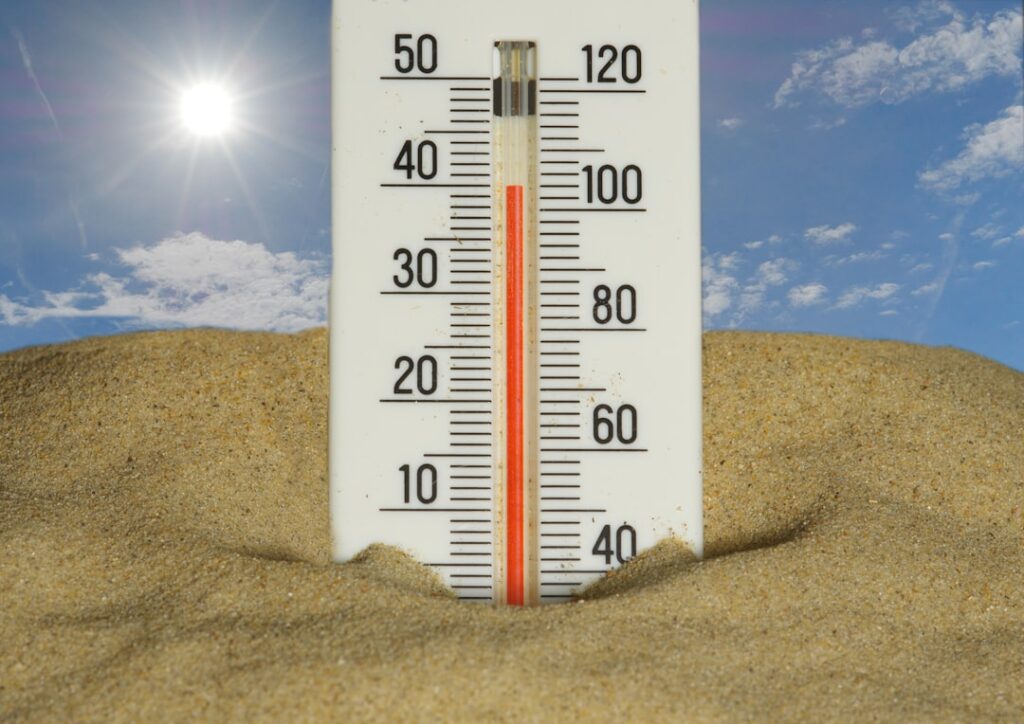
Image: GlobalBeat / 2026
Super El Niño threatens 2027 temperature spike past 1.5°C mark
Muhammad Asghar | GlobalBeat
A brewing “super El Niño” in the Pacific could push global temperatures past the 1.5°C threshold by early 2027, climate scientists warned Monday.
The U.S. Climate Prediction Center raised the odds of an extreme El Niño this year to 55%, the highest mid-year forecast since comparable records began in 1950.
Such an event would stack record Pacific heat on top of decade-high baseline warming, sending planetary averages toward the symbolic red line written into the 2015 Paris accord. Britain’s Met Office said a super El Niño would “more likely than not” deliver a 12-month spell above 1.5°C somewhere between January 2027 and December 2028.
Sea-surface temperatures in the central-eastern Pacific surged 2.1°C above normal during the first week of May, the largest weekly anomaly on record for the date. Satellite data showed a tongue of anomalously warm water extending 9,000 km west from Peru, matching the footprint of the 1997-98 and 2015-16 super El Niños that each added roughly 0.2°C to global averages.
“When subsurface heat is this high by May, the atmosphere almost always flips into full-bore El Niño by December,” said Michelle L’Heureux, head of NOAA’s El Niño forecasting team. She told reporters the probability that the event peaks above 2°C “now exceeds 30%”.
The projection lands days after the European Union’s Copernicus service declared the past 12 months the hottest such period since instruments began, with a global average of 1.58°C above pre-industrial levels. Analysts caution that figure is inflated by the fading 2023-24 moderate El Niño; take away the Pacific signal and the underlying trend sits near 1.3°C.
Still, a super El Niño would shatter that calculus. Climate models run by the U.K. Met Office indicate a 65% chance that the first breach of the 1.5°C target, measured as a multi-year average, occurs during the next decade. A 2027 spike would deliver the headline breach three years earlier than the central estimate.
Developing countries are bracing for fallout. Peru has already slashed anchovy catch quotas 68% after warm coastal waters drove fish into deeper, cooler layers. Indonesia’s meteorological agency warned that cocoa-growing regions of Sulawesi face an 80% drop in rainfall from July to September, threatening a harvest that supplies 260,000 tonnes a year to global chocolate makers.
“We are looking at a potential humanitarian squeeze,” Cristina Rumbaitis del Rio, senior adviser at the U.N. Climate Resilience Initiative, told reporters. She said drought-driven food inflation in 2024 pushed 22 million Africans into acute hunger; a super El Niño could double that toll next year.
Insurance markets are already repricing risk. Catastrophe-modeller RMS told clients Friday it will raise U.S. hurricane risk ratings 12-18% for 2026 policies, citing El Niño’s tendency to suppress Atlantic wind shear and free storms to strengthen. Florida’s state-run insurer hinted that average premiums could crest $5,000 for the first time once the new outlook is folded into filings due August 1.
Carbon markets reacted in reverse. EU emission allowances sank 6% Monday on expectations that an economic slowdown triggered by energy shocks could cut industrial output. Traders said any repeat of the 2015-16 pattern, when global CO₂ growth briefly flat-lined, would erode demand for permits.
Climate diplomacy faces its own turbulence. The 1.5°C target has anchored every U.N. summit since Paris; a breach would intensify calls for richer nations to compensate poorer ones for so-called “loss and damage”. Egyptian negotiator Mohamed Nasr, speaking at a Berlin preparatory meeting, said an El Niño-driven overshoot “would not be an excuse for inaction” but conceded developing countries would push for accelerated payouts.
Scientists stress that a single year above 1.5°C does not equate to permanent breach of the Paris limit, defined as a 20-year average. Yet each hot spike leaves a legacy. Ocean heat absorbed during 2015-16 still warps coral reef ecosystems across the tropics, while Arctic sea-ice that vanished that summer has never fully recovered.
Background
El Niño, Spanish for “the boy child”, was named by Peruvian fishermen who noticed warmer coastal waters around Christmas. The phenomenon arises every 2-7 years when west-blowing trade winds collapse, allowing warm water pooled near Asia to slosh back toward South America. The shift rearranges global jet streams, drying out Australia and Indonesia while drenching Peru and California. Records extracted from coral cores show mega-events, exceeding 2°C, occurred on average once per century before 1950. Since 1980 the frequency has doubled; researchers debate whether climate change is loading the dice.
Economists calculate the 1997-98 super El Niño caused $5 trillion in weather-related losses, counting both direct damage and suppressed growth. The 2015-16 edition, though weaker in Pacific terms, still cost insurers $31 billion and helped 2016 become the then-hottest year. Each event also spikes atmospheric CO₂ as drought-stressed forests absorb less carbon; Mauna Loa data show growth rates leapt 50% during past episodes.
What’s Next
The next six months will determine whether the Pacific heat wave qualifies as “super”. A network of 70 deep-ocean buoys transmits weekly temperature profiles; should the subsurface warm pool top 300% of normal volume by September, atmospheric scientists say an extreme event is locked in. Governments will receive their first consensus outlook July 9 when the World Meteorological Organization releases an El Niño update timed for G-20 finance talks in Rio de Janeiro.
Senior Correspondent, World & Geopolitics
Muhammad Asghar covers international affairs, conflict zones, and US foreign policy for GlobalBeat. He has reported on events across the Middle East, South Asia, and Eastern Europe, with a focus on the intersection of diplomacy and armed conflict. He has been writing wire-service journalism for over a decade.