Iran War Live Updates: Trump and Iran Trade Threats on 1st Day of Strait of Hormuz Blockade
Iran ignores Trumps red-line warning as both sides trade threats on first day of Tehrans Hormuz blockade.
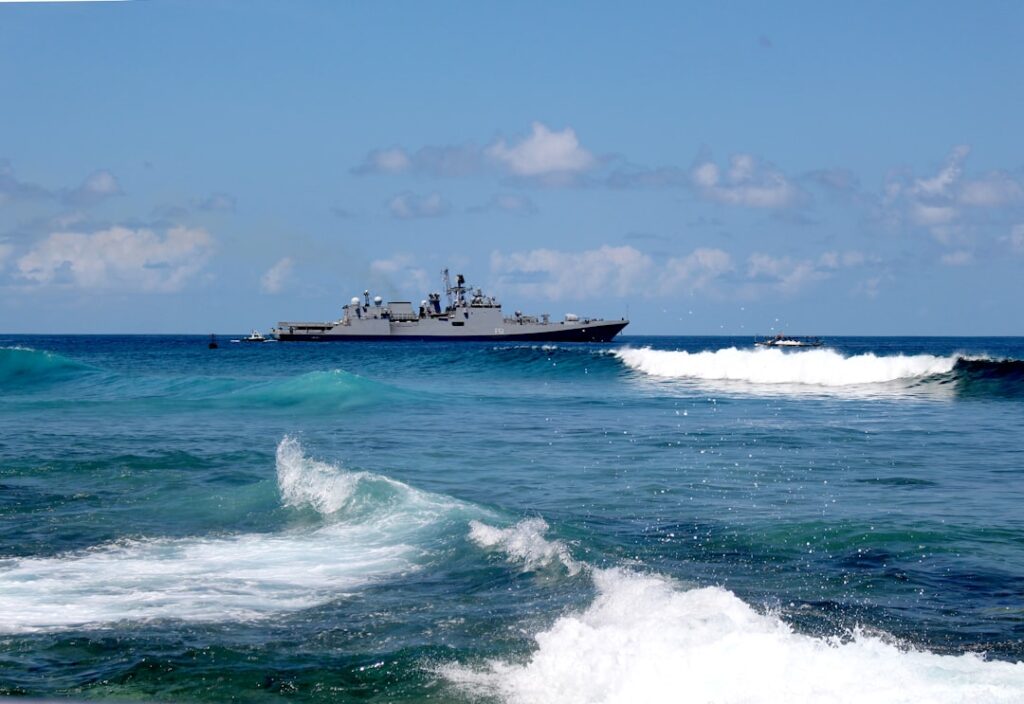
Image: GlobalBeat / 2026
**Iran Strait Hormuz: Trump threatens military action as Tehran blockades oil route on Day 1**
Muhammad Asghar | GlobalBeat
Iran’s Revolutionary Guards seized 2 tankers and fired warning shots at a US destroyer while President Trump vowed to “open the strait by force” within hours of Tehran’s dawn blockade.
The Strait of Hormuz closed to commercial traffic at 6:23 a.m. local time when Iranian speedboats surrounded the Marshall Islands-flagged MV Horizon, according to maritime trackers and US Navy footage released Monday.
Roughly 20 percent of global oil exports normally pass through the 21-mile waterway, making the shutdown the most serious escalation since Trump reimposed sanctions on Iran in 2018. Brent crude surged 14 percent to $97.40 a barrel, the highest since September 2023.
Trump tweeted at 8:17 a.m. Washington time that Iran had made “a very big mistake” and told reporters at the White House that “all options, including military, are on the table.” Defense Secretary Pete Hegseth later confirmed the USS Stockdale and USS Higgins were already “in contact” with Iranian vessels.
Iran’s Foreign Minister Abbas Araghchi responded on state TV that the blockade was a “legitimate defensive measure” after Western powers refused to guarantee relief from banking sanctions. The Revolutionary Guards released video showing commandos fast-roping onto the 274-meter Horizon while helicopters buzzed overhead.
Shipping data showed at least 27 laden tankers idling inside the Persian Gulf by noon, including 4 Saudi very-large crude carriers that had been bound for China and India. The U.S. Fifth Fleet said it was escorting “select vessels” but gave no timeline for reopening the chokepoint.
Oil analysts warned the disruption could eclipse the 2019 Abqaiq attack that briefly knocked out 5 percent of world supply. “If this lasts more than 72 hours we are looking at triple-digit Brent and emergency SPR releases,” RBC commodity Helima Croft told clients.
Japan and South Korea, both heavily dependent on Gulf crude, called for an immediate end to the blockade. Tokyo’s industry minister Yoji Muto said the government may tap national reserves “within days” while Seoul convened an emergency cabinet meeting. China, Iran’s largest oil buyer, urged “all parties to exercise restraint” but stopped short of condemning Tehran.
The clash compounds a week of spiraling tensions. On Friday the Pentagon announced 2,500 additional troops would deploy to Kuwait after Iran expanded uranium enrichment to 84 percent, a hair below weapons grade. Over the weekend Israeli jets struck an arms depot near Damascus that Tehran used to resupply Hezbollah, killing 7 Revolutionary Guards, according to the Syrian Observatory for Human Rights.
Background
The 1980s “Tanker War” set the template for today’s crisis. During the Iran-Iraq conflict both sides targeted merchant shipping, prompting the U.S. to reflag Kuwaiti tankers and escort convoys. Operation Earnest Will, which began in 1987, saw America and Iran engage in direct naval skirmishes, including Washington’s downing of Iran Air Flight 655 that killed 290 civilians.
Tehran has threatened Hormuz repeatedly since 2008 whenever sanctions pressure mounted. The strait is only 21 miles wide at its narrowest, with two 1-mile shipping lanes separated by a buffer. shutting it requires little more than mining the channels or parking a few warships crosswise. Yet every prior threat ended without a full closure, as Iranian leaders weighed the cost of alienating Asian buyers who provide a financial lifeline.
What’s Next
The U.N. Security Council meets Tuesday afternoon after Washington requested an emergency session. Diplomats expect a U.S. push for new multilateral sanctions, but Russia and China are likely to veto, leaving Trump to assemble a “coalition of the willing” to escort tankers, mirroring the 1980s precedent.
Insurance costs for Gulf cargoes have already quadrupled, and shippers are weighing the longer Cape of Good Hope route that adds 12 days and $2 million per voyage. If Iran keeps the strait shut through the week, analysts say gasoline prices in the United States could jump 35 cents a gallon by Memorial Day, injecting energy inflation into the 2026 midterm campaign.
Senior Correspondent, World & Geopolitics
Muhammad Asghar covers international affairs, conflict zones, and US foreign policy for GlobalBeat. He has reported on events across the Middle East, South Asia, and Eastern Europe, with a focus on the intersection of diplomacy and armed conflict. He has been writing wire-service journalism for over a decade.