Israel and Lebanon extend ceasefire amid Hormuz uncertainty
Israel and Lebanon agree to extend ceasefire as tensions persist over potential disruptions to shipping in the strategic Strait of Hormuz.
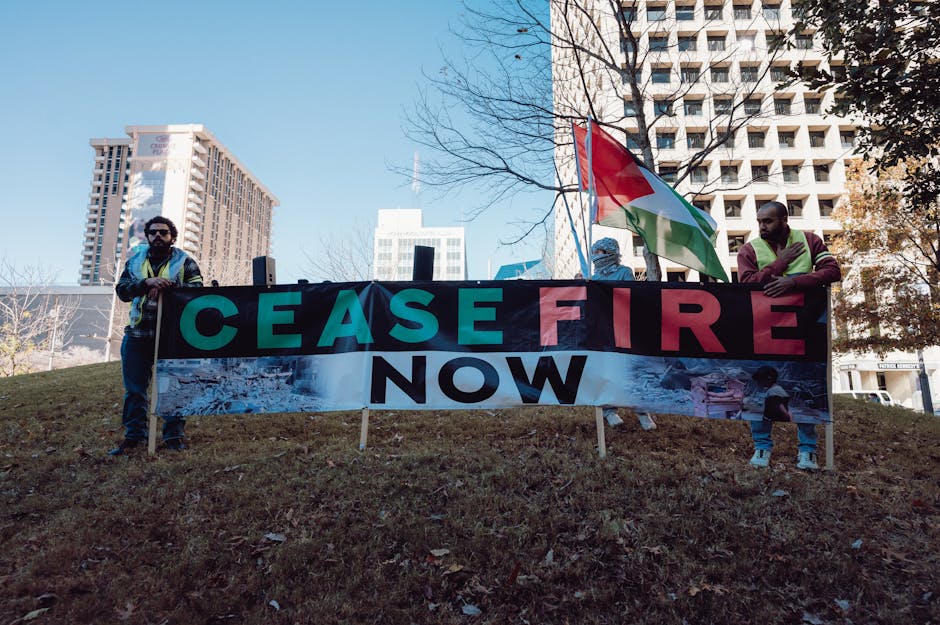
Image: GlobalBeat / 2026
Israel Lebanon ceasefire extended 30 days as Hormuz tanker risks spike
By Muhammad Asghar | GlobalBeat
Israel and Lebanon extended their ceasefire for another 30 days on Thursday, hours after a second tanker crew abandoned ship near Iran’s coast.
The move came as U.S. warships shadowed merchant vessels through the Strait of Hormuz, where two oil carriers reported engine trouble in 24 hours. Oil markets jumped 4% on the jitters.
The November truce had quieted cross-border rocket fire after a year of clashes between Israeli forces and Hezbollah fighters. More than 3,700 people died on both sides before the pause took hold, according to Lebanese and Israeli tallies.
Israel’s security cabinet approved the extension unanimously after a late-night session, Prime Minister Benjamin Netanyahu’s office said. The Lebanese government, which does not directly negotiate with Israel, accepted the arrangement through U.S. and French mediators, two senior Beirut officials told reporters.
Washington framed the extension as insurance against a two-front war while Persian Gulf shipping faces new threats. “We cannot deal with Iran and Lebanon exploding at the same moment,” a senior State Department official said, speaking on condition of anonymity.
The original 60-day ceasefire was scheduled to expire at midnight. Under its terms, Israeli troops withdrew from several southern Lebanese villages while Hezbollah pulled fighters north of the Litani River, 29 km from the border. U.N. peacekeepers verified the pullback using daily drone flights, the mission reported.
Both sides accused each other of smaller violations, but no Israeli or Lebanese civilians died from border fire since the pact took effect. That calm contrasted sharply with Gaza, where Israeli airstrikes killed 42 people overnight, hospital officials said.
Netanyahu told ministers the extension gives Israel “freedom of action” elsewhere, an apparent reference to Iran. Israeli jets struck a weapons depot near Damascus early Wednesday, Syria’s military announced, signaling the premier’s willingness to keep hitting Iranian-linked targets.
Lebanese officials warned any breach could still unravel the wider deal. “One miscalculation and we are back to the cemetery,” Transport Minister Ali Hamieh said in Tyre, visiting families whose homes were flattened during last autumn’s fighting.
The Hormuz scares added urgency. The tanker Cordelia Moon issued a mayday late Wednesday, saying its engine room flooded 21 nautical miles off Iran’s coast. The 24-strong crew evacuated to a passing container ship, the U.S. Navy’s Bahrain-based Fifth Fleet reported. Hours earlier the bulk carrier Stena Impeccable reported similar trouble in the same stretch of water. Both vessels sail under Liberian flags and carry Indian crews, shipping databases show.
Iran denied responsibility and offered assistance, its Ports Authority said. Yet the timing rattled traders; Brent crude futures rose $2.41 to $62.37 a barrel, the highest close since February.
Insurance premiums for Gulf transits surged 18% overnight, a London broker calculated. At least 4 tankers changed course to hug the Omani coastline, ship-tracking data indicated.
Washington has accused Tehran of plotting tanker seizures since Trump reimposed oil sanctions last month. Iran’s Revolutionary Guards seized two cargo ships in 2023 after the U.S. froze Iranian crude revenue held abroad.
Hezbollah, founded by Iran’s Revolutionary Guards in the 1980s, has stayed silent on the Hormuz incidents. The group’s leader Hassan Nasrallah is expected to speak Friday, its Al-Manar television reported.
French President Emmanuel Macron called Netanyahu and Lebanese army chief Joseph Aoun Thursday to lock in the extension, the Élysée Palace said. France contributes 700 soldiers to the U.N. peacekeeping force and co-chairs the truce monitoring group with Washington.
Macron warned any resumption of border fighting would “paralyze” humanitarian aid still flowing to southern Lebanon, where 112,000 people remain displaced, according to U.N. figures.
Israeli opposition leader Yair Lapid backed the truce, arguing the military needs breathing space before a possible Iran confrontation. “We cannot afford a northern front while facing Tehran,” Lapid told Army Radio.
In Beirut, shops reopened in previously emptied border towns. Talal Ahmad, 48, swept glass from his Tyre grocery storefront, wrecked during an Israeli airstrike in October. “I want to believe this holds, but we have been disappointed before,” he said.
Background
Israel and Lebanon have fought several major wars since 1948, most recently in 2006, when a Hezbollah raid captured two Israeli soldiers and sparked a 34-day conflict that killed 1,200 Lebanese and 160 Israelis.
The mountainous border, drawn by colonial France in 1923, remains disputed at 13 points. Tensions soared again in October 2023 when Hamas attacked Israel and Hezbollah fired rockets in solidarity, triggering daily artillery duels that displaced tens of thousands on both sides.
What’s Next
U.S. envoy Amos Hochstein will shuttle between Jerusalem and Beirut next week to seek a permanent maritime and land boundary accord, officials said. Failure could see the ceasefire expire again on May 25, precisely when the U.N. Security Council votes on renewing the peacekeepers’ mandate.
European traders will watch Friday’s oil futures after the Hormuz scares. Any third tanker incident is likely to push Brent above $65, analysts warned, reviving inflation fears across import-dependent Asia.
Senior Correspondent, World & Geopolitics
Muhammad Asghar covers international affairs, conflict zones, and US foreign policy for GlobalBeat. He has reported on events across the Middle East, South Asia, and Eastern Europe, with a focus on the intersection of diplomacy and armed conflict. He has been writing wire-service journalism for over a decade.