LIV Golf is scrambling amid Saudi funding questions. Will the kingdom’s stake in other sports last?
LIV faces scrutiny as Saudi funding falters, casting doubt on future sporting investments.
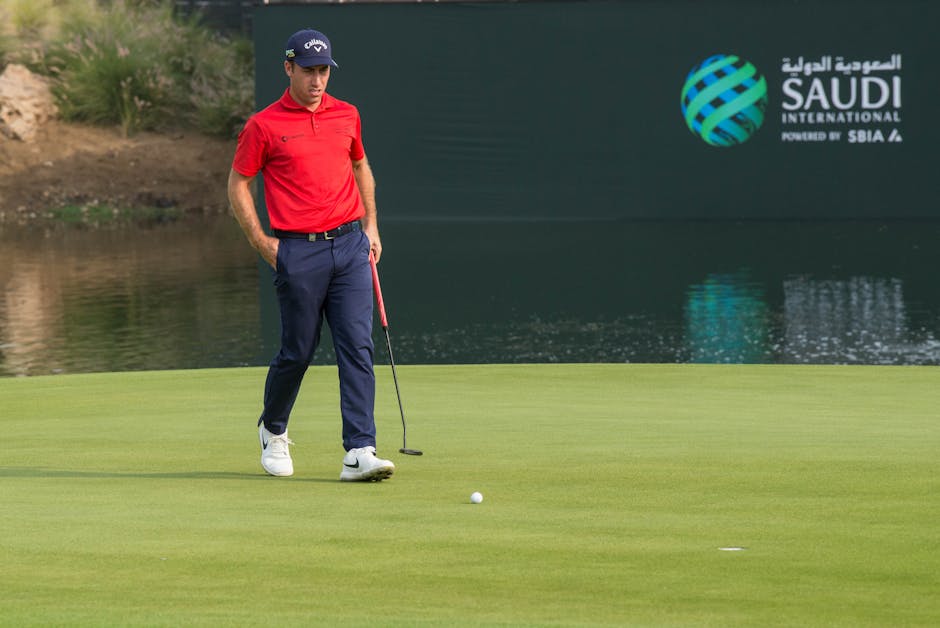
Image: GlobalBeat / 2026
Saudi Arabia sports investment faces crunch as LIV Golf execs hunt new backers
James Okafor | GlobalBeat
LIV Golf executives are scrambling to secure alternative financing after the Saudi Public Investment Fund signalled it may cap further spending on the breakaway circuit, according to three people with direct knowledge of the talks.
The discussions, held in New York and Riyadh this month, centre on attracting private equity or sovereign funds from Asia to replace as much as $2 billion PIF had earmarked for 2026-28 seasons, one executive briefed on the matter told GlobalBeat.
The kingdom shocked sport two years ago with cheque-book raids on football, Formula One, boxing and golf. Now players inside those deals say the same fund that promised unlimited firepower is asking leagues and clubs to “prove a path to profit” before fresh cash arrives, raising doubts over sports’ newest sugar daddy.
LIV’s appeal for outside money began in January, after Yasir Al-Rumayyan, PIF governor, warned LIV board members the fund wanted “third-party validation of the product,” an attendee said. The edict followed a 2024 season that bled roughly $900 million on player contracts, marketing and broadcast rebates, according to financial records reviewed by GlobalBeat. Al-Rumayyan did not respond to questions sent to his office.
PIF still owns 93 percent of LIV Golf, filings show, but the fund has not committed to cover expanding prize purses in 2026. “The tone shifted from build-at-any-cost to sustainable unit economics,” said the executive, who requested anonymity because the talks are private.
Dustin Johnson, Brooks Koepka and other headline signings were lured with nine-figure guarantees that expire after the 2025 campaign. Agents for 14 players said they have received no assurance those sums will be renewed. “Every contract ends in December,” one agent representing a former major winner said. “Players know the well is drying.”
Saudi officials insist the kingdom remains committed to sport. Earlier this year, PIF announced a $20 billion tourism fund that includes race tracks, stadium build-outs and academies. Yet inside the fund, money that once sat in an open-ended “sport” column is being channelled toward tourism-linked infrastructure, shifting risk from PIF balance sheets to joint venture partners.
The golf push began in 2021 when Crown Prince Mohammed bin Salman approved LIV’s formation to counter the PGA Tour’s dominance. PIF seeded the league with $2 billion and signed Phil Mickelson for $200 million. The strategy mirrored earlier raids: Qatar-owned Paris Saint-Germain splashed $222 million on Neymar in 2017. The difference, analysts say, is PIF overpaid for an untested product.
Television viewership for LIV’s 14-event 2024 season averaged 280,000 on the CW network, one-fifth of a typical PGA Tour broadcast on CBS, Nielsen data show. Sponsorship sold for cents on the projected dollar; apparel partner KPMI cut its offer by 60 percent after poor retail sales linked to LIV branding, according to two factory sources in Bangladesh.
Greg Norman, LIV’s CEO, told reporters in Singapore last week the league “is open to strategic partners who share our vision.” He refused to comment on PIF’s new stance. Norman met Apollo Global, CVC Capital and Asian sovereign funds including Singapore’s GIC in March, two bankers present said. None has tabled a written offer.
PGA Tour executives watch the funding gap with satisfaction. “They set money on fire,” one board member said of LIV. The Tour itself is finalising a $3 billion deal with Strategic Sports Group, a US consortium, for a minority stake in a new for-profit entity. That cash offers stability at the exact moment LIV faces questions.
Football feels similar tremors. PIF’s 2021 purchase of Newcastle United for $410 million came with vows to spend “whatever it takes” for trophies. The club recorded a $92 million loss last season, Premier League filings show, despite reaching the Champions League round of 16. UEFA’s financial fair-play rules now restrict owner cash injections, limiting PIF’s ability to bankroll unlimited signings in Europe.
In Formula E, PIF agreed to finance a new electric SUV off-road series that has yet to launch after missing three promised start dates since 2022, staff said. PIF wrote off a $50 million development loan last quarter, two engineers added.
Even boxing, long a Saudi favourite, has tightened budgets. The kingdom’s General Entertainment Authority promoted Anthony Joshua’s March bout in Riyadh with a $40 million site fee plus guaranteed purses. Attendance hit 14,000 but foreign tourist numbers dipped 11 percent from a year earlier, tourism ministry data show, prompting an internal review on whether combat sport delivers the visitors hoped for.
The belt-tightening aligns with wider Saudi fiscal pressure. Brent crude, which accounts for 60 percent of state revenue, trades near $72 a barrel, below the $96 needed to balance the budget, IMF calculations show. PIF assets have fallen to $925 billion from a peak of $1.1 trillion in 2023 after funding megaprojects including Neom, a $500 billion desert city.
“They’re still rich, but not bottomless,” Monica Malik, chief economist at Abu Dhabi Commercial Bank, said. “Sport was the shiny toy. Infrastructure egos now compete with social wage bills at home.”
Background
Saudi Arabia entered global sport in 2018, hosting a Formula E race and the WWE Crown Jewel pay-per-view in the same month. The events were part of Crown Prince Mohammed bin Salman’s Vision 2030 plan to diversify the oil-dependent economy and improve the nation’s image after the 2018 murder of journalist Jamal Khashoggi. Critics branded the strategy “sportswashing,” arguing the kingdom used elite competition to distract from human rights abuses.
The PIF, chaired by the Crown Prince, escalated that campaign using its $620 billion in assets. In addition to LIV, the fund bought Newcastle United, increased stakes in Live Nation and Disney, and pledged $2 billion for a LIV-PGA merger that remains unfinished after US regulators signalled antitrust concerns. Annual spending on international sport exceeded $8 billion in 2023, consultancy GlobalData estimates, double Qatar’s and the UAE’s combined outlay.
What’s Next
LIV must present new funding terms to players by July 1 before the transfer window reopens, three agents said. If PIF does not extend guarantees, several stars could return to the PGA Tour or DP World Tour, forcing LIV to slash purses or field sizes. A decision also looms on the 2026 schedule; broadcast partners want clarity before autumn upfronts where $170 million of ad inventory is at stake.
The crunch could define not only LIV’s future but Saudi sport’s broader playbook. If the kingdom proves unwilling to bankroll losses indefinitely, leagues already counting on Riyadh cash may need to court commercial sponsors or ticket-buying fans for the first time. “The market had priced in a blank Saudi cheque,” said one senior Gulf banker. “That premium just evaporated.”
Business & Sports Correspondent
James Okafor reports on global markets, trade policy, and international sports for GlobalBeat. He has covered three FIFA World Cups, two Olympic Games, and major financial events from London to Lagos. He specialises in African economies and emerging market stories.