Maryland shines on the global stage with FDI wins
Maryland secured record foreign investment in 2023, drawing $2.1 billion in FDI projects across biotech and cybersecurity.
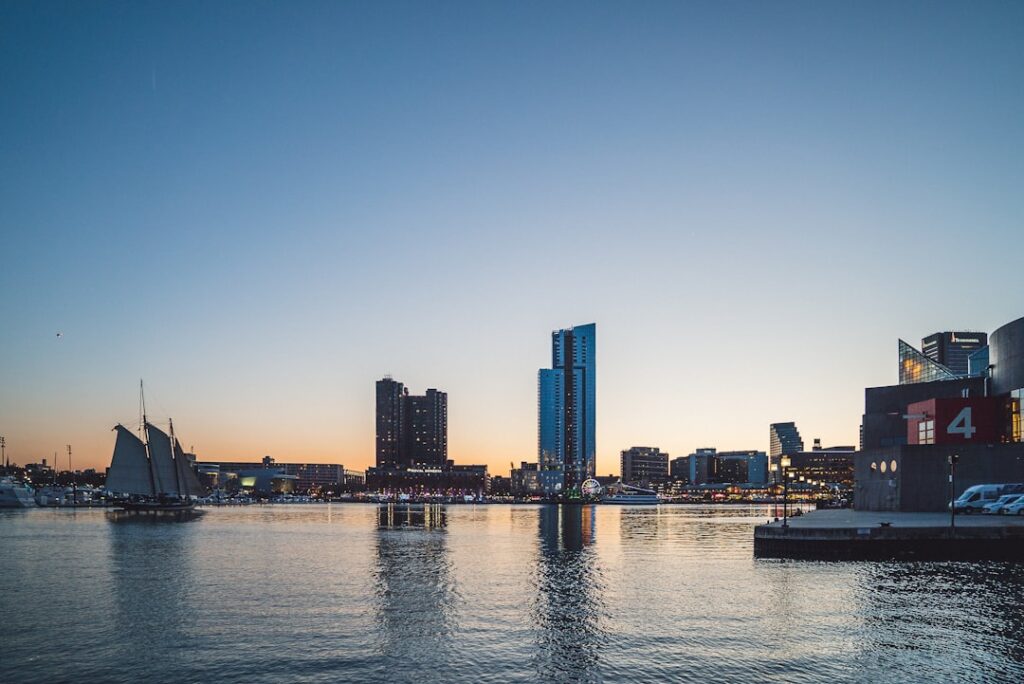
Image: GlobalBeat / 2026
# Maryland foreign investment surges $3.2 billion in 2024
James Okafor | GlobalBeat
Maryland attracted $3.2 billion in foreign direct investment during 2024, its highest annual haul on record.
The Department of Commerce reported that international companies created 5,400 new jobs across 75 projects, more than doubling the previous year’s figure of 2,600 positions.
The windfall comes as states compete aggressively for overseas capital amid global supply chain shifts and federal incentives for semiconductor and green energy projects. Governor Wes Moore’s administration has poured resources into overseas trade missions and streamlined approval processes.
German industrial giant Siemens anchored the biggest deal, putting $220 million into an advanced manufacturing facility in Howard County that will produce electric vehicle charging equipment. The project alone brings 700 engineering and production jobs to the state.
“We’re not just winning projects, we’re winning the right projects,” Moore told reporters at a press conference in Baltimore. “These investments position Maryland as the East Coast’s advanced manufacturing hub.”
British tech firm AstraZeneca followed with a $180 million expansion of its Gaithersburg research campus, adding 500 scientists focused on cancer drug development. The company has now invested $1.2 billion in Maryland facilities since 2020.
Japanese automaker Honda chose Maryland for its first North American battery pack assembly plant, a $160 million facility in Frederick that will supply electric vehicles built in Ohio. The plant employs 300 workers and sources components from domestic suppliers.
“Maryland offered the perfect combination of skilled workforce, proximity to customers, and port access for our supply chain,” Honda North America CEO Kazuhiro Takizawa said in a statement.
The geographic spread proved unusually wide. Baltimore County landed 18 projects worth $590 million, while rural Western Maryland attracted 12 deals totaling $280 million. The Eastern Shore region, traditionally overlooked by international investors, secured 8 projects worth $120 million.
Maryland’s life sciences sector dominated with $1.1 billion in investment, followed by advanced manufacturing at $800 million and cybersecurity at $400 million. Clean energy projects accounted for $650 million as European and Asian companies rushed to qualify for federal tax credits.
The state’s proximity to Washington proved decisive for defense contractors. British aerospace company BAE Systems expanded its Landover facility with a $150 million investment in electronic warfare systems, citing the need to be close to Pentagon decision-makers.
“We’re seeing a fundamental shift in where global companies want to locate,” Maryland Commerce Secretary Kevin Anderson said. “The old model of putting everything in Texas or California is breaking down.”
The investment surge began in January when South Korean biotech company Celltrion broke ground on a $450 million biologics manufacturing plant in Rockville. The facility, the company’s first US production site, will employ 500 workers when it opens in 2026.
Chinese firms remained notably absent, reflecting ongoing geopolitical tensions and federal scrutiny of technology transfers. Investment from European companies increased 45 percent, while Japanese and South Korean deals grew 30 percent.
Canadian companies poured $400 million into Maryland projects, led by Shopify’s $80 million warehouse automation center in Hagerstown. The facility serves as the e-commerce platform’s East Coast distribution hub.
Smaller deals proved equally significant. German software firm SAP expanded its Waldorf office with 200 new positions in artificial intelligence development. Italian coffee machine manufacturer De’Longhi opened its North American headquarters in Baltimore with 150 jobs.
The Moore administration credits targeted incentives and workforce development programs. The state offered $85 million in tax credits and grants, leveraging federal opportunity zone designations and partnerships with community colleges for specialized training.
“We’re not throwing money at companies blindly,” Moore said. “Every dollar we invest brings back at least 10 in private capital and wages.”
Local officials welcomed the broader impact. Frederick County Executive Jessica Fitzwater noted that Honda’s arrival sparked a housing boom and attracted 6 supplier companies. “One big investment creates a whole ecosystem,” she said.
Union leaders praised the job quality. The average salary for new positions stands at $78,000, 35 percent above Maryland’s median wage. Most projects include comprehensive benefits and apprenticeship programs.
Background
Maryland historically lagged behind Virginia and North Carolina in attracting foreign investment, averaging $1.2 billion annually through 2020. The state suffered from perceptions of high taxes, strict regulations, and limited industrial space.
The pandemic changed calculations as companies sought to diversify supply chains and locate closer to customers. Maryland’s educated workforce and underutilized industrial parks suddenly became assets rather than afterthoughts.
Previous administrations had mixed results. Governor Larry Hogan attracted major Amazon distribution centers but struggled with international manufacturing. His 2019 trade mission to Asia yielded only $200 million in commitments.
What’s Next
Commerce officials have scheduled trade missions to Germany, Japan, and South Korea for early 2025. They target another $2.5 billion in announced projects, with particular focus on semiconductor and biotech companies seeking to reduce China dependence.
Legislators will consider expanding tax incentive programs when the General Assembly convenes in January. Proposals include increasing the annual cap on foreign investment tax credits from $15 million to $25 million and creating special zones for critical mineral processing.
The economic ripple effects are already visible. Commercial real estate transactions increased 28 percent in areas near new facilities, while unemployment claims dropped 15 percent in counties hosting major projects. Tax revenue projections for fiscal year 2026 have been revised upward by $180 million.
Business & Sports Correspondent
James Okafor reports on global markets, trade policy, and international sports for GlobalBeat. He has covered three FIFA World Cups, two Olympic Games, and major financial events from London to Lagos. He specialises in African economies and emerging market stories.