Practicing today for tomorrow’s emergencies
WHO leads global drill to test disease outbreak readiness among nations and partners.
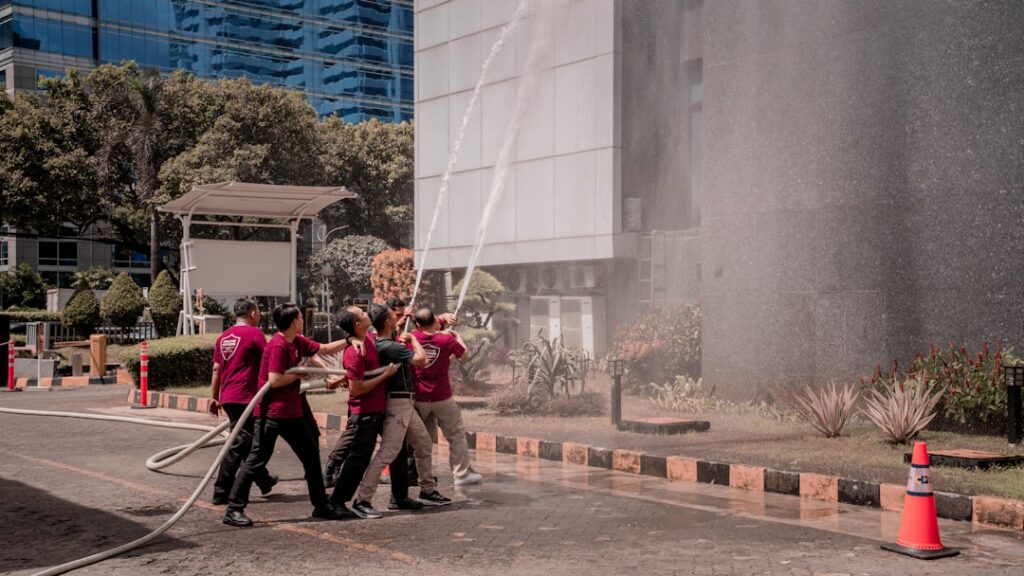
Image: GlobalBeat / 2026
Emergency preparedness training: WHO simulates global pandemic response with 150 nations
Muhammad Asghar | GlobalBeat
The World Health Organization mobilized 150 countries and 2,000 health workers Monday for the largest international drill to test rapid response systems against a simulated hemorrhagic fever outbreak crossing six borders.
Live exercises in Bangkok, Lagos, and Mexico City forced national teams to activate emergency protocols within three hours of receiving the first fake case reports, according to WHO Director-General Dr. Shukri Esmail.
Monday’s drill was timed to the exact week when COVID-19 jumped from a cluster in Wuhan to every continent in 2020. Health ministers admit most systems identified then failed within six weeks.
Teams inside a Nairobi warehouse stacked mock body bags while colleagues in Geneva raced to ship fake vaccine batches that required constant cooling at minus 80C. The scenario demanded 1.2 million manufactured doses within 48 hours.
Esmail told reporters the exercise uncovered “a two-day gap” between confirmed human-to-human transmission and the first international alert. She said any delay beyond 24 hours during a real viral hemorrhagic fever would cost at least 10,000 extra lives.
Thailand’s public health minister Cholnan Srikaew interrupted a cabinet meeting to join the drill, ordering border thermal scanners switched on after a traveler from the fictional country of “Carana” collapsed at Don Mueang Airport. Airport staff in Bangkok later admitted the patient had cleared immigration before anyone noticed the fever.
Nigeria’s Centre for Disease Control activated its emergency operations center in Abuja at 09:14 local time when the simulation reported 14 bleeding patients in a Lagos slum. Director-General Dr. Ifedayo Adetifa said contact tracers located 312 names in four hours, a speed he called “better than 2014, still too slow for this virus.”
The fake pathogen carried a 25% case fatality rate and spread through droplets, forcing WHO to model global flight bans that would cut passenger traffic 85%. Airlines participating in the drill estimated daily revenue losses at $470 million, according to the International Air Transport Association.
Mexico’s health ministry locked down a Tijuana hospital after the drill script introduced infected blood samples mislabeled as routine diagnostics. Nurses originally kept working for 17 minutes before anyone sounded the alarm, a lag officials blamed on shift changes.
A Geneva warehouse holding 8,000 doses of an experimental Ebola vaccine lost power for three hours when a technician tripped a circuit breaker, exposing the vials to rising temperatures. WHO logisticians now recommend splitting stockpiles across four regional hubs instead of two.
Germany’s Friedrich Merz government refused to release military transport planes for the simulation, citing “real-world deployment limits,” forcing WHO to charter commercial cargo jets at $2.3 million apiece. Officials noted the cost would balloon during an actual crisis when demand surges.
Background
Emergency preparedness training became standard after the 2003 SARS outbreak revealed a patchwork of national response speeds. WHO mandated simulation drills every two years under its International Health Regulations, yet many countries skipped cycles between 2016 and 2020, focused on domestic priorities.
The COVID-19 pandemic exposed additional failures: France discovered 40 million expired masks, Canada lost track of 1 million respirators, and India exhausted oxygen stocks in Delhi within five days. Monday’s drill inserted identical chokepoints to measure improvement since those shortages.
What’s Next
WHO will publish a confidential scorecard to each participating state within three weeks, then convene a closed-door meeting in Geneva on May 18 to assign regional rapid-response teams the authority to land in any country within 24 hours of a declared outbreak.
The next full-scale rehearsal is scheduled for 2028, but Esmail warned the agency may accelerate timelines if biosecurity intelligence flags increased lab accidents or wildlife viral spillovers before then.
Senior Correspondent, World & Geopolitics
Muhammad Asghar covers international affairs, conflict zones, and US foreign policy for GlobalBeat. He has reported on events across the Middle East, South Asia, and Eastern Europe, with a focus on the intersection of diplomacy and armed conflict. He has been writing wire-service journalism for over a decade.