We’re not profiteering on fuel. But my staff still face abuse
Independent fuel retailer Goran Raven says rising oil prices hurt his margins too and staff still face abuse despite no profiteering.
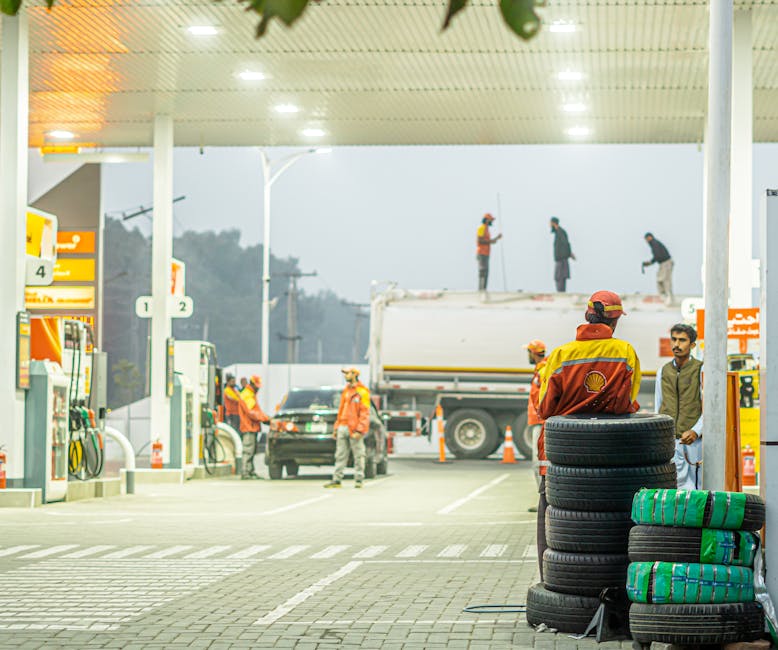
Image: GlobalBeat / 2026
Independent Fuel Retailer Denies Price Profiteering Amid Staff Harassment
Goran Raven says smaller stations are ‘horrific’ casualties of volatile oil markets, not fuel price profiteering culprits
📌 KEY FACTS
• Oil has climbed roughly 30 % since early March, pushing UK pump prices back above £1.50 a litre
• Corner-site operators say margins have shrunk to 4-6 pence per litre, half the usual 10 pence buffer
• No regulator has opened a formal investigation, but social-media campaigns urge boycotts of “greedy” independents
• Trade body PRA warns half of rural stations could close if wholesale surge persists into summer
• In late 2022 similar spikes forced 386 UK forecourts to shut, the highest annual loss on record
Staff at Goran Raven’s suburban petrol station arrive each dawn wearing plain clothes, changing into branded uniforms only after locking the door behind them. Since pump prices jumped 14 pence in a fortnight, abuse has become “the opening ritual,” Raven says, denying customers’ accusations of fuel price profiteering.
Wholesale costs started climbing in March when Ukraine launched drone barrages against Russian refineries and OPEC+ members extended production cuts through June. Retail prices followed, yet roadside operators insist the numbers on their totems reflect panic in the Rotterdam spot market, not local collusion. With household budgets already squeezed, anger is landing on the nearest target: neighbourhood forecourts run by families rather than multinationals.
“Margins shredded in hours”: the spreadsheet behind a price board
Raven, who owns two stations in the West Midlands, opens his laptop to a spreadsheet titled “Platts vs Pump”. The left column shows the daily benchmark Argus euro-bob quote for refined petrol; the right shows his recommended retail ceiling. Last Thursday wholesale leapt 3.7 pence a litre after a surprise drawdown in U.S. inventories. “By 4 p.m. my recommended price was 167.9 p. I posted 165.9 and still lost seven pence on every litre sold,” he says.
Credit-card fees chew another 1.9 %, while utility bills have doubled since 2021. Raven says independents survive by selling sandwiches, not super-unleaded; fuel merely “drives footfall.” Yet headlines screaming “£90 a tank” erase that nuance.
From pints to petrol: why corner garages cannot hedge like BP
Supermajors such as Shell and BP own refineries, tankers and trading arms that let them smooth turbulent inputs. Raven buys fuel three days in advance from a third-party distributor at spot-plus-transport, a model common among Britain’s 5,150 small forecourts. Financial hedging instruments exist, but minimum lots start at 5,000 tonnes—roughly 6 million litres—equal to his entire annual volume.
The Petrol Retailers Association says independents pump on average 2.9 million litres a year, a scale that excludes them from paper markets. “We’re essentially pubs that must re-price pints every morning because麦芽 prices sneezed,” Raven shrugs.
“Put the nozzle down, mate” – Verbal attacks turn physical
Over Easter weekend a motorist hurled a coffee cup at Raven’s cashier after spotting 169.9 p on the signboard. Police logged the incident as a public-order offence; the worker took two days’ unpaid leave. Raven now records all transactions on CCTV and has installed a panic button.
Community Facebook groups amplify rage. One post urging locals to boycott “the crook on Chester Road” was shared 600 times, even though Raven’s site matched the Asda supermarket two miles away. The Advertising Standards Authority confirms it has received 38 complaints about alleged profiteering this month; none has progressed to formal review.
Political heat without statutory power
Energy Secretary Claire Coutinho last week urged retailers to “pass on falling costs responsibly,” hinting at statutory monitoring. Yet the Competition & Markets Authority concluded in December there was “very limited evidence” of national collusion during 2022’s record highs, instead blaming global crude.
Labour MP Tonia Antoniazzi has tabled an early-day motion calling for a pump-price transparency body modelled on Germany’s Market Transparency Unit for Fuels. Such agencies force sellers to report next-day prices to an official register, but Germany’s federal cartel office still recorded 1,600 anti-competitive probes last year, indicating transparency alone does not tame volatility.
Smallest sites fold first: 2023 closures concentrate in villages
Data from the Energy Institute show the UK lost 3 % of its public refuelling points in 2023, with 78 % of closures in communities of fewer than 5,000 residents. When the sole forecourt in Alston, Cumbria, shut last July, residents faced a 44-mile round trip for fuel.
Raven fears copy-cat shutdowns if spring margins stay negative. He employs eight staff, many drawn from nearby housing estates where car ownership tops 85 %. “Close me and you don’t just lose petrol—you kill a local ATM, parcel drop, Sunday paper shop,” he warns.
The numbers tell a different story
Between 2019 and 2023 U.S. crude futures rose 48 %, yet UK retail petrol climbed 56 %, according to ONS figures. The gap suggests either sterling weakness—pounds buys 11 % fewer dollars than five years ago—or margin expansion somewhere along the chain. Analysts at Wood Mackenzie calculate North Sea transport, storage and duty account for the difference, leaving retailers little wriggle room. Still, drivers primed by cost-of-living narratives see only the sticky upside on forecourt totems.
Raven’s June accounts show a net loss of £4,300 on fuel sales, offset by a £7,100 profit from groceries and vapes. “If that’s profiteering, I’m shockingly bad at it,” he laughs.
From the forecourt coal-face: A mother’s weekly ritual, repriced
Every Friday at 7 a.m. care-worker Aisha Malik fills her 12-year-old Zafira on the school run. Last month the pump clicked at £62; yesterday it hit £74. “That extra twelve pounds comes straight out of my daughter’s swimming lessons,” she says, shooting a glare toward the cashier she does not realise is Raven’s niece, also living pay-cheque to pay-cheque. Neither woman knows Rotterdam futures gapped overnight; both feel powerless, one paying, the other being paid to absorb anger.
Global ripple: Copy-cat price spikes in EU and Australia
French Finance Minister Bruno Le Maire threatened intervention after EU wholesale petrol reached €780 per cubic metre in April, the highest since September 2023. Spain temporarily cut biofuel blending requirements to ease costs, while Australia’s competition watchdog launched a 12-month monitoring scheme. Each case shows democracies struggling to buffer consumers from a globally traded commodity whose benchmark is set far beyond local high streets. The episode underscores that fuel price profiteering fears flare whenever barrels rally, even when evidence points to refineries, not retailers.
What happens next
The Department for Energy Security & Net Zero will publish its consultation on a proposed Fuel Price Transparency Scheme by July 4. Meantime Raven plans weekly “fuel-clinic” Facebook lives detailing his landed costs in hopes of trolling away abuse. If Brent crude stays above $90 through the summer, analysts predict another 8-10 pence pump rise by August, squeezing margins further. Raven has already frozen new hires and shelved investment in rapid chargers, equipment that would future-proof a business caught between net-zero ambitions and today’s volatile oil reality.