Vance tells Iran ‘two can play that game’ as US begins blockade of Iranian ports
Vance warns Iran two can play that game as U.S. begins naval blockade of Iranian ports.
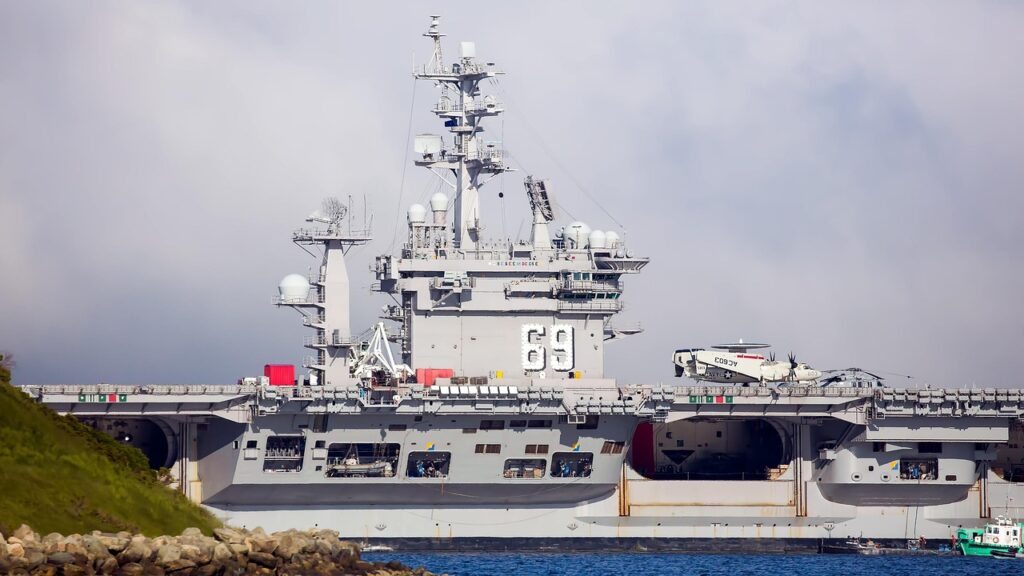
Image: GlobalBeat / 2026
US Iran blockade: Vance warns Tehran with port shutdown
Muhammad Asghar | GlobalBeat
JD Vance told Iran “two can play that game” while announcing a US naval blockade of Iranian ports.
The vice president’s warning came as American warships began turning away vessels approaching Bandar Abbas and other major Iranian harbors, effectively cutting off maritime trade to the Islamic Republic.
The blockade marks the most aggressive US economic warfare against Tehran since the 1979 revolution. Iranian leaders have threatened military retaliation but have not yet acted on those warnings. The move pushes tensions to their highest point in years.
Vance delivered the administration’s message aboard the USS Nimitz in the Strait of Hormuz. “Iran thought they could choke off world trade through this vital waterway,” he told sailors. “We just showed them what real pressure looks like.” The vice president’s five-hour visit included a tour of the carrier’s flight deck and meetings with naval commanders planning the operation.
The blockade began at 0600 local time with the destroyer USS Labey issuing radio warnings to a Liberian-flagged tanker bound for Bandar Abbas. Three US vessels now patrol the approaches to Iran’s main ports, supported by British and French frigates. Coalition forces have intercepted 14 commercial ships since operations began, turning most back toward international waters.
Iran’s foreign ministry called the blockade “an act of piracy” and promised “decisive action” against American forces. But Revolutionary Guard commanders briefed reporters on defensive measures only, suggesting Tehran wants to avoid direct confrontation. The military has deployed anti-ship missiles along the coast and ordered speedboat patrols to monitor US movements.
Global oil prices jumped 8 percent on news of the blockade, reaching $89 per barrel. Iran exports roughly 1.5 million barrels daily through its Gulf terminals, providing most of the government’s foreign currency. Analysts predict Tehran could lose $3 billion monthly if the blockade continues. Insurance rates for ships transiting the Strait of Hormuz have doubled overnight.
European allies offered cautious support while urging restraint. “We recognize American concerns about Iranian behavior,” German Chancellor Friedrich Merz said in Berlin. “But we need assurances this won’t escalate into wider conflict.” France has contributed a frigate to patrol duties but warned against any attacks on civilian vessels. British officials said their participation would continue pending a parliamentary review.
Background
The blockade follows months of Iranian harassment of commercial shipping in the Persian Gulf. Tehran has seized or attacked 19 tankers since January, including vessels linked to Israel and Western nations. The Revolutionary Guard claimed these actions responded to economic sanctions preventing Iranian oil sales. Previous US responses included cyber attacks and limited strikes on Iranian facilities.
Relations between Washington and Tehran have deteriorated steadily since President Trump withdrew from the 2015 nuclear agreement. His administration imposed thousands of sanctions targeting Iranian oil, banking, and military sectors. Supreme Leader Ayatollah Khamenei has refused direct negotiations, calling American demands “unreasonable.” European efforts to preserve the nuclear deal collapsed last year after Iran resumed uranium enrichment.
What’s Next
The UN Security Council meets Tuesday to discuss the maritime crisis, though Russia and China are expected to veto any resolution backing the US position. Iranian officials said they would present a formal protest to the International Maritime Organization while preparing “asymmetric” responses. Oil analysts predict prices could breach $100 if shipping companies avoid the entire Gulf region.
The blockade’s success depends on maintaining international support and preventing Iranian retaliation against coalition forces. Military planners worry about swarm attacks by Revolutionary Guard speedboats or missile strikes from the Iranian coast. Any American casualties could trigger expanded operations against Iranian military facilities, risking the broader war both sides claim they want to avoid.
Senior Correspondent, World & Geopolitics
Muhammad Asghar covers international affairs, conflict zones, and US foreign policy for GlobalBeat. He has reported on events across the Middle East, South Asia, and Eastern Europe, with a focus on the intersection of diplomacy and armed conflict. He has been writing wire-service journalism for over a decade.