Dickinson faculty discuss US-Israel conflict with Iran in Clarke forum panel
Dickinson faculty debated U.S.-Israel tensions and Iran’s role at Clarke Forum, urging diplomacy, student engagement.
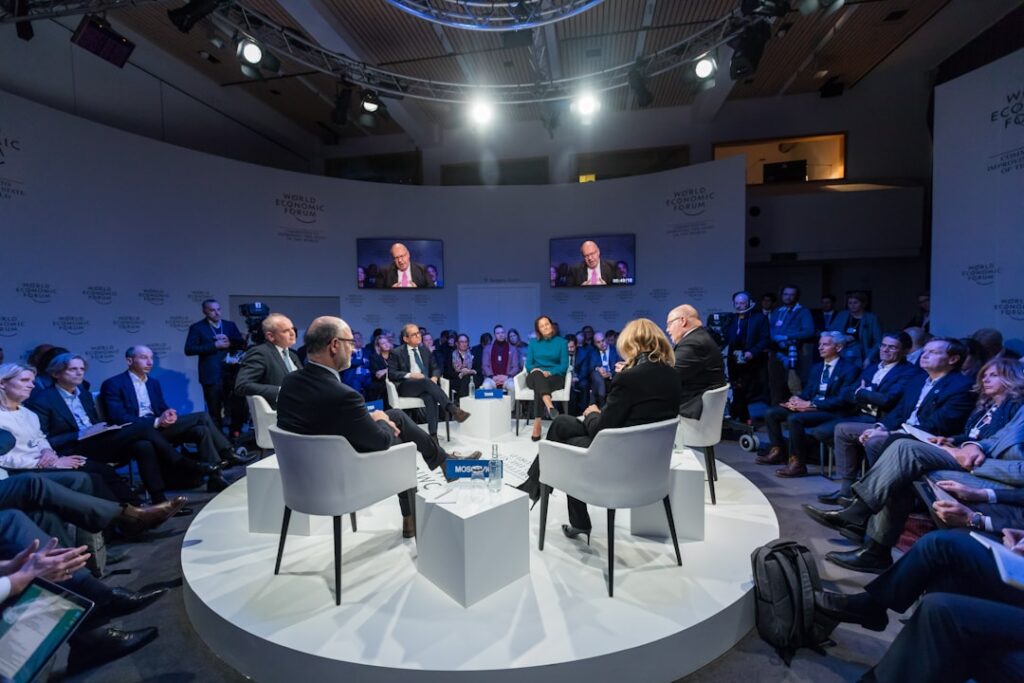
Image: GlobalBeat / 2026
US Israel Iran conflict: Dickinson professors warn Trump strategy risks regional war
Muhammad Asghar | GlobalBeat
Three Dickinson College professors told a packed Clarke Forum that President Donald Trump’s escalating confrontation with Iran could trigger a wider Middle East war.
The panelists said Israeli strikes on Iranian nuclear sites, backed by U.S. intelligence, have pushed Tehran closer to building a bomb.
History professor Karl Qualls said the current crisis echoes 2003 Iraq momentum. “We are watching the same playbook,” he told 200 students and faculty Wednesday night.
Middle East specialist David Commins warned Iran’s uranium enrichment now reaches 84 percent, just shy of weapons grade. “They could have enough material for 3 bombs within weeks,” he said.
International relations chair Sarah Krieg defended the 2015 nuclear deal that Trump abandoned in 2018. “The agreement worked. Iran shipped out 98 percent of its enriched uranium,” she said.
The professors spoke as U.S. B-2 bombers conducted fresh exercises over Qatar and Israel’s defense minister vowed to “remove the Iranian nuclear threat forever.”
Commins traced the current crisis to Trump’s maximum pressure campaign. “When you strangle a country economically, they don’t capitulate. They accelerate their most dangerous programs,” he said.
He showed satellite images of Fordow enrichment facility buried under 90 meters of rock. “Even America’s biggest bunker busters might not reach these centrifuges,” he added.
Krieg analyzed Trump’s shifting red lines. “First it was ‘no nuclear weapons ever.’ Then ‘no enrichment beyond 3.67 percent.’ Now we’re bombing because they hit 84 percent,” she said.
The political science professor said Iran learned from Israeli attacks on Iraq’s Osirak reactor in 1981 and Syria’s Al-Kibar facility in 2007. “They dispersed, they buried, they duplicated,” she said.
Qualls compared today’s rhetoric to pre-Iraq war promises. “In 2003 they said it would be a ‘cakewalk.’ Now they’re saying Iran’s nuclear program can be eliminated in 48 hours,” he said.
The history professor warned urban warfare in Iran would dwarf Iraq. “You’re talking about 85 million people, mountain terrain, and a military that actually fights back,” he said.
Students questioned whether Trump’s Muslim ban and embassy move to Jerusalem had fueled anti-American sentiment. “Every U.S. action becomes propaganda fodder for Tehran’s hardliners,” Commins responded.
The panel differed on solutions. Krieg advocated returning to diplomacy. “Even Netanyahu’s former intelligence chiefs say bombing won’t work. Only negotiations can prevent a bomb,” she said.
Commins argued for containing rather than eliminating Iran’s program. “We contained Stalin’s Soviet Union. We contained Mao’s China. Both had nuclear weapons and were far more dangerous,” he said.
Qualls warned time was running short. “Once Iran conducts a nuclear test, the entire calculus changes. Saudi Arabia and Turkey will want their own bombs,” he said.
The forum ended with a sobering prediction. “My contacts at State say Trump’s team has already drafted the authorization for force. They’re just waiting for an incident,” Krieg told the audience.
Background
The U.S. and Iran have been enemies since the 1979 Islamic Revolution overthrew the Shah, a key American ally. Washington supported Iraq during its 1980-88 war with Iran that killed 1 million people.
Iran’s nuclear program began in the 1950s with U.S. help under the Atoms for Peace program. But after 1979, the West feared Tehran sought atomic weapons. Israel destroyed Iraq’s reactor partly to prevent an Arab nuclear response to Iran’s program.
The 2015 Joint Comprehensive Plan of Action capped Iran’s enrichment at 3.67 percent and its uranium stockpile at 300 kilograms. UN inspectors confirmed Iran’s compliance 15 consecutive times before Trump withdrew in May 2018.
Since then, Iran has enriched uranium to ever higher levels while attacking shipping in the Persian Gulf and supporting proxy forces across the region. The U.S. has responded with sanctions that have shrunk Iran’s economy by 20 percent.
What’s Next
The professors said everything depends on Iran’s next move. If Tehran enriches beyond 90 percent weapons grade or expels UN inspectors, Israel will likely attack within days. That could trigger Hezbollah’s 150,000 rockets against Israeli cities and send oil prices above $150 per barrel.
Commins predicted a grim cycle. “Each Israeli strike sets Iran back 2 years but pushes them to rebuild better hidden. We’re trapped in escalation with no exit strategy,” he said.
The International Crisis Group warned that a full war could kill 10,000 Americans in the region’s military bases. Iran’s navy could close the Strait of Hormuz, through which 20 percent of global oil flows.
Congress remains divided. While Republicans demand tougher action, 50 Democrats wrote Trump warning he lacks legal authority for war without their approval. The War Powers Act gives presidents 60 days of military action before needing congressional backing.
European allies are scrambling. France proposed a last-minute deal allowing Iran to keep some enrichment in exchange for permanent UN inspections. But Trump rejected it as “too weak” while Israel called it “appeasement.”
The clock ticks. Intelligence agencies estimate Iran needs just 3 weeks to enrich its current uranium to weapons grade. Defense officials told the forum that U.S. forces in the region have increased from 40,000 to 70,000 troops since January.
Students left Clark Forum with mixed emotions. “I came expecting academic theory. I left worrying about draft letters,” said sophomore Maya Patel, 19.
The history professors last words hung in the air: “My generation already gave you Iraq and Afghanistan. Don’t let us give you Iran too.”
Senior Correspondent, World & Geopolitics
Muhammad Asghar covers international affairs, conflict zones, and US foreign policy for GlobalBeat. He has reported on events across the Middle East, South Asia, and Eastern Europe, with a focus on the intersection of diplomacy and armed conflict. He has been writing wire-service journalism for over a decade.