‘Extraordinarily brilliant’ Trump leaves no doubt he will challenge any election GOP losses as ‘rigged’ with latest post
Trump declares on Truth Social that any Republican losses will be deemed rigged, signaling plans to contest unfavorable midterm results.
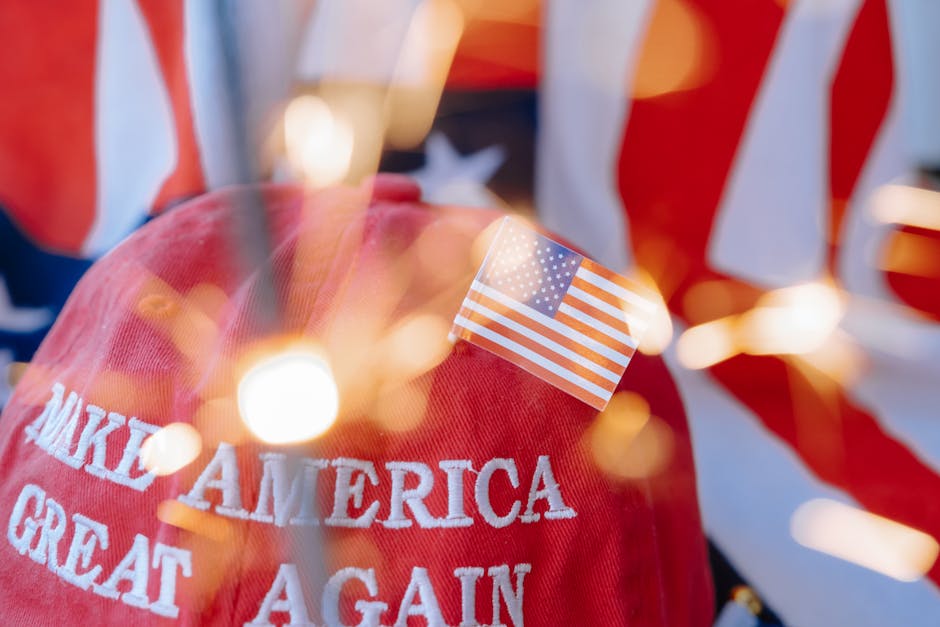
Image: GlobalBeat / 2026
Trump declares GOP election losses ‘rigged’ in Truth Social post on primary night
Muhammad Asghar | GlobalBeat
Donald Trump warned Republicans on Tuesday night that any GOP losses in upcoming elections are “rigged” just as results showed his endorsed candidates winning key primaries.
The 47th president wrote on Truth Social that “there is NO WAY” Republicans can lose “with extraordinarily brilliant people like me” unless Democrats cheat.
Trump’s latest broadside against electoral integrity came as Katie Britt secured the Alabama Supreme Court seat and Dave McCormick filed paperwork for Pennsylvania’s governorship, both carrying his endorsement. The post marks his most explicit signal that he will reject any defeat as fraud, setting up a potential constitutional crisis if November midterms prove close.
The former president spent 2020-2024 claiming without evidence that Joe Biden stole the White House through mail ballots and voting machines. Over 60 court cases, multiple recounts and his own Department of Homeland Security found no fraud that could change results. Still, 70 percent of Republican voters now believe Biden illegitimately holds office, according to CNN polling released last month.
Tuesday’s missive landed on the final primary filing deadline for House races across six states where Trump’s picks face establishment Republicans. “Why would anyone be surprised at our unprecedented victories?” he wrote. The president called his endorsements “perfect” and “unmatched in history” before pivoting to warn about cheating. “If we do lose, it will only be because the election is rigged,” the post concluded.
Presidential historian Timothy Naftali told reporters this language represents “a frontal assault on democratic legitimacy.” Naftali said Trump has transformed from a candidate who disputed outcomes to one who pre-rejects them. “He’s saying the only legitimate election is one Republicans win,” the Columbia University professor added. The shift removes any incentive for the party to accept adverse results, raising fears of violence like the January 6, 2021 Capitol attack.
House Speaker Mike Johnson refused to answer questions about the post after morning votes. The Louisiana Republican has backed Trump’s fraud claims while privately urging members to focus on policy. Senator JD Vance of Ohio told CNN that “voters deserve transparency” but stopped short of endorsing preemptive statements about future elections. Democrats condemned both responses as insufficient. “Republican silence equals complicity,” Senator Amy Klobuchar tweeted.
Trump’s strategy builds on fundraising success. His Save America PAC raised $55 million in the first quarter of 2026, Federal Election Commission filings show, with 60 percent of small donors citing “election integrity” as their top concern. The money funds lawyers who file last-minute challenges to voter rolls and ballot counting procedures in swing states. One filing last week in Nevada seeks to purge 23,000 registrations based on a 2020 postal address list, mirroring tactics used before Biden’s victory five years ago.
County election officials brace for chaos. Pennsylvania’s top election official Al Schmidt told the Philadelphia Inquirer that Trump’s post “forces us to prepare for frivolous lawsuits.” Schmidt, a Republican, said poll workers already face threats and harassment from conspiracy theorists who believe his fraud claims. The Brennan Center for Justice documented 102 election officials who resigned last year citing safety concerns, double the 2020 number. Training programs now include de-escalation techniques alongside ballot security protocols.
Background
Trump’s refusal to concede defeat began during the 2016 Iowa caucuses when he accused Ted Cruz of “fraud” for spreading false reports that Ben Carson dropped out. Cruz won the state by 3 percentage points. Trump accepted the result but planted seeds he would challenge future setbacks. His 2020 strategy evolved after mail voting expanded during the COVID-19 pandemic, giving him a mechanism to claim ballots counted after Election Day were illegitimate.
The Big Lie, as Democrats call it, became central to Republican politics. State legislatures passed 42 laws restricting ballot access in 2021-2025, according to the Voting Rights Lab. All cited fraud prevention despite no evidence of systematic problems. Party officials in battleground states created “election integrity” units staffed with Trump loyalists who monitor polling places. The former president demands personal loyalty on the issue from candidates seeking his endorsement, making fraud claims a purity test.
What’s Next
Trump holds rallies in Michigan and Wisconsin this weekend where he is expected to repeat rigged election rhetoric. Both states feature competitive House races that could determine control of Congress in November. Democrats plan counter-programming with voting rights groups who will register voters at the events, setting up potential confrontations between the rival camps outside arena venues.
His post positions Trump to declare victory regardless of results, forcing courts and Congress to adjudicate any disputes. Constitutional scholars warn that preemptively rejecting elections undermines the peaceful transfer of power that has defined American democracy since 1800. “We are heading toward a crisis of legitimacy unlike anything since the Civil War,” said Harvard Law professor Noah Feldman. The only uncertainty is whether Republican voters will accept outcomes their leader declares fraudulent.
Senior Correspondent, World & Geopolitics
Muhammad Asghar covers international affairs, conflict zones, and US foreign policy for GlobalBeat. He has reported on events across the Middle East, South Asia, and Eastern Europe, with a focus on the intersection of diplomacy and armed conflict. He has been writing wire-service journalism for over a decade.